
Cast Iron Drill Press Table: Compatibility and Setup Guide
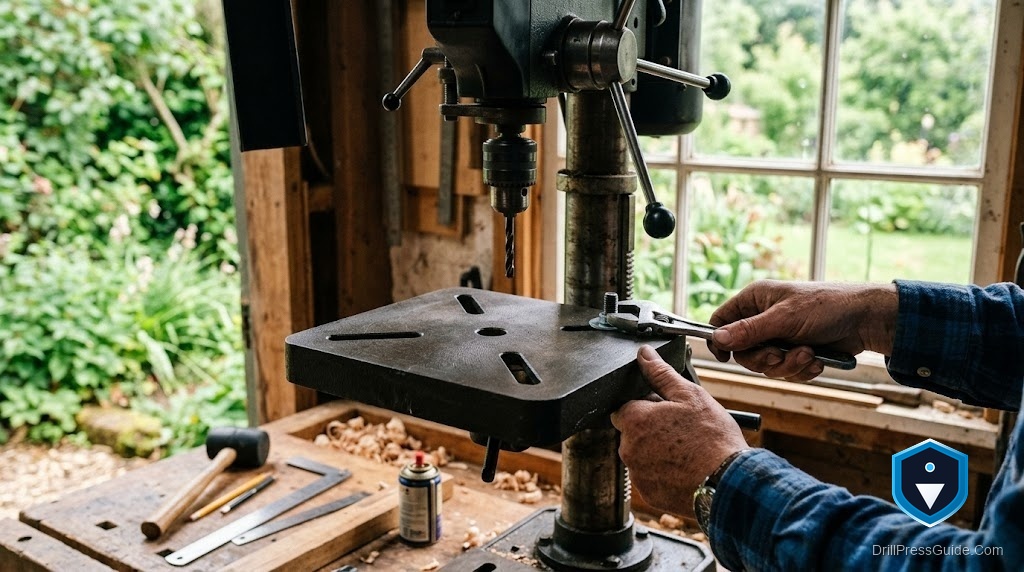
Cast iron has a reputation in the shop, and it earns it. Mass and flatness are what you want under a spinning bit, and a heavy iron table gives you both. That is why a cast iron drill press table is a genuine upgrade for metalwork and precise drilling. The catch is compatibility: cast iron does not flex to fit, so it either mounts to your machine or it does not. Knowing what to measure, and where iron shines versus where a wood-friendly top wins, makes for a purchase you keep.
A cast iron drill press table is a heavy iron work surface, either the factory table or an aftermarket iron top, that mounts to the press column or its existing table. Its appeal is flatness, mass that damps vibration, and slots that hold clamps and vises firmly. Its trade is weight and a harder fit, since iron will not be trimmed to suit.
Short answer: a cast iron table fits when its mounting matches your column or table slots and your press can carry the weight, and it rewards you with flatness and vibration damping for metalwork. Measure the mounting and confirm the press can bear it before buying.
Why cast iron earns its place
Three things make iron worth the weight. Flatness gives you a true reference so parts sit square. Mass damps the vibration that makes bits chatter, so holes come out cleaner, especially in metal. And cast slots grip T-bolts and vises hard, so clamping is secure. For metalworking and precise drilling, those qualities are exactly what you want under the bit.
That is the case for iron. The case against is honest too: it is heavy, and it is unforgiving to fit.
Compatibility is the real question
Iron does not bend to fit, so mounting is everything. If it is a replacement factory table, it must match your press model’s column and bracket. If it is an aftermarket iron top, it must mount to your existing table’s slots or holes, and the added weight must be within what the press and its table support can carry.
The honest limitation: a heavy iron top on a light benchtop press can overload the table support and the column, making the head harder to raise and lower and stressing the casting. Confirm your press is built for the weight before you add it.
Measure and check before buying
- Mounting. Match the iron table to your column or your existing table’s slot pattern.
- Weight capacity. Confirm the press and table support can carry the added mass.
- Slot pattern. So your vises and clamps fit the new table’s slots.
- Spindle travel. A thick top raises the work; confirm the quill still reaches.
Cast iron versus an MDF shop top
Against an MDF woodworking top, cast iron wins on flatness, mass, and vibration damping for metalwork, and loses on weight and on wood-friendly features like a replaceable insert and an easily added fence. For metal and precision, iron is the better surface; for wood, an MDF top with a fence and stop, from the WEN table or the IBUILDIT and Woodsmith plans, is often more useful and lighter. You can compare a cast iron drill press table with an MDF drill press table with fence.
Setting it up
- Confirm the mounting matches your column or table slots and that the press can carry the weight.
- Mount the iron table flat and secure so it cannot shift.
- Square it to the bit.
- Fit your vise or clamps in the slots and clamp the work.
- Set the correct speed, wear eye protection, and keep clear of the chuck, per CCOHS and OSHA.
Who should read this
If you drill metal and want flatness and steady, chatter-free holes, cast iron is the surface to have, just confirm the fit and weight. If your work is mostly wood, a lighter MDF top with a fence and insert may serve you better.
Bottom line
A cast iron drill press table brings flatness, mass, and firm clamping that metalwork loves, but iron will not fit itself to your machine. Measure the mounting, confirm the press can carry the weight, and match the slot pattern before buying. For metal and precision it is a lasting upgrade; for wood, weigh it against a lighter, feature-rich top.
- Cast iron gives flatness, vibration damping, and firm clamping for metalwork.
- It must match your column or table slots, and the press must carry the weight.
- For mostly wood, a lighter MDF top with a fence and insert may serve better.
FAQ
Why choose a cast iron drill press table? For flatness, mass that damps vibration, and slots that grip vises and clamps firmly, all of which help precise drilling, especially in metal.
Will a cast iron top fit my press? Only if its mounting matches your column or existing table slots and your press can carry the added weight. Measure and confirm first.
Can a heavy iron top overload a benchtop press? Yes. On a light press, a heavy top can strain the table support and column. Confirm the press is rated for the weight.
Does a thick table reduce drilling depth? It can. A thick top raises the work, so check that your spindle travel still reaches your tallest parts.
Cast iron or MDF? Cast iron for metal and precision; MDF with a fence and insert for wood, where lighter weight and tear-out backing matter more.
Do I re-square after mounting? Yes. After fitting any new table, square it to the bit before precise drilling.
References
- WEN 24 x 12-Inch Drill Press Table with Adjustable Fence and Stop Block: https://wenproducts.com/products/24-by-12-inch-drill-press-table-with-an-adjustable-fence-and-stop-block-t
- IBUILDIT Drill Press Table Plans: https://ibuildit.ca/plans/drill-press-table/
- Woodsmith Drill Press Table Plan: https://www.woodsmithplans.com/plan/pw-drill-press-table/


