Choosing an All in One Table Saw Drill Press That Fits the Work and the Table
Every cramped shop has the same daydream: one machine that saws, drills, and does it all, tucked into a corner where three tools used to fight for space. The all in one table saw drill press is that daydream on a spec sheet. Before you chase it, though, it helps to understand what these combos really are, where they shine, and where a single shared table forces a compromise you will feel on every cut. The honest picture makes for a much better buying decision.
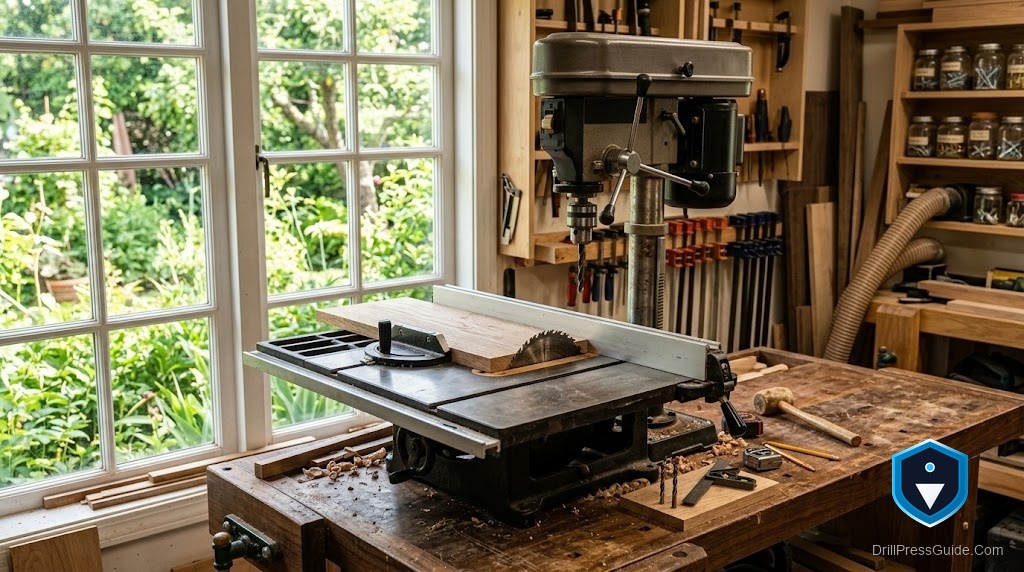
An all in one table saw drill press is a combination machine that puts more than one function, sawing, drilling, sometimes turning, on a shared frame and often a shared work surface. The appeal is a small footprint and one machine to buy; the catch is that a surface and setup optimized for one operation is rarely ideal for another. Understanding that trade is the key to buying one you will not regret.
Short answer: a combo works when your space is tight, your work is light, and you accept setup changes between functions, and it disappoints when you need full capacity or fast switching. If drilling accuracy matters most, a dedicated press with a proper table often serves better than the drilling side of a combo.
What you are really buying
Combination machines trade specialization for space. The drilling side of a combo shares structure with the sawing side, so its table, travel, and rigidity are compromises rather than a press built only to drill. That is not automatically bad; for light, occasional work in a small shop, one machine that does several jobs is genuinely useful.
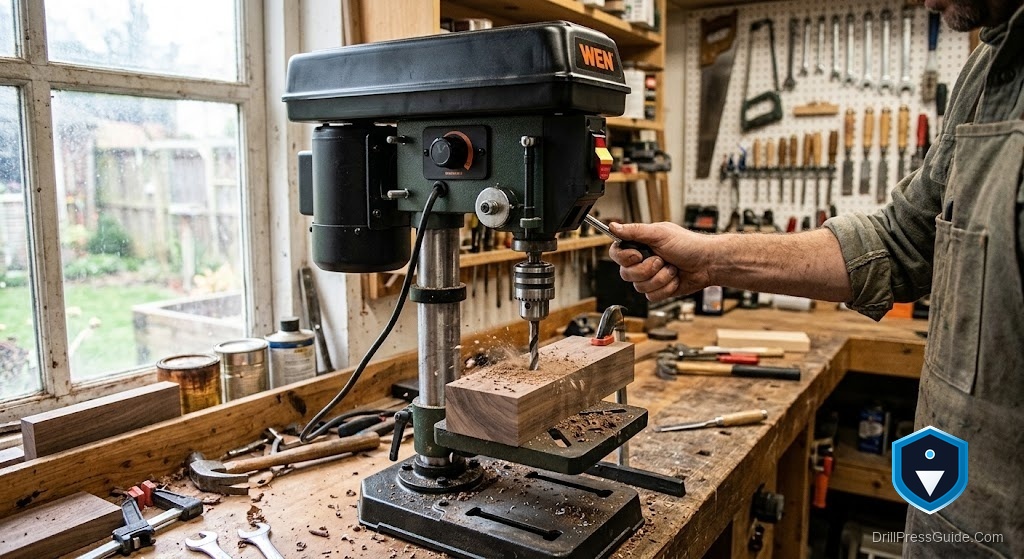
But you should judge the drilling side on drill-press terms. Look at the work surface, the spindle travel, the speed range, and how solidly the table locks, the same things that make a standalone press good or poor.
Where the shared table bites
The honest limitation is the shared surface. A saw table wants to be flat, wide, and open for feeding stock; a drill press table wants slots, a fence, and a replaceable insert around the bit. One surface cannot be perfect for both. So drilling on a combo often means a table that is fine for a saw but awkward for repeatable holes, without the fence, stop, and insert that make a press table shine.
The fix, if you own or want a combo, is to treat the drilling surface like any press and add a proper drill press top. A shop-built or ready-made table with a fence, stop block, and insert, mounted on the combo’s drilling side, restores the accuracy the shared surface lacks.
Judge a combo on these
- Drilling surface. Can you fit a fence, stop, and insert, or add a proper top?
- Spindle travel and speed. Enough depth and the right speeds for your bits and materials?
- Setup switching. How long to change from sawing to drilling, and how often will you?
- Rigidity. Does the drilling side lock solid, or does the shared frame flex?
Combo versus a dedicated press
Against a dedicated drill press, the combo wins on footprint and doing several jobs from one frame, and loses on drilling accuracy, capacity, and fast switching. A standalone press has a table built for drilling, more travel, and no setup changes to drill. For a tight shop with light work, the combo earns its place; for real drilling accuracy, the dedicated press wins. If you keep a combo, you can still add a proper drill press table with fence and stop to its drilling side, or anchor work with drill press hold down clamps.
Setting up the drilling side
- Judge the drilling side on travel, speed, surface, and rigidity, not just the saw specs.
- Add a proper drill press top with a fence, stop, and insert if the shared table lacks them.
- Mount the top flat and square it to the bit.
- Set the correct speed for your bit and material.
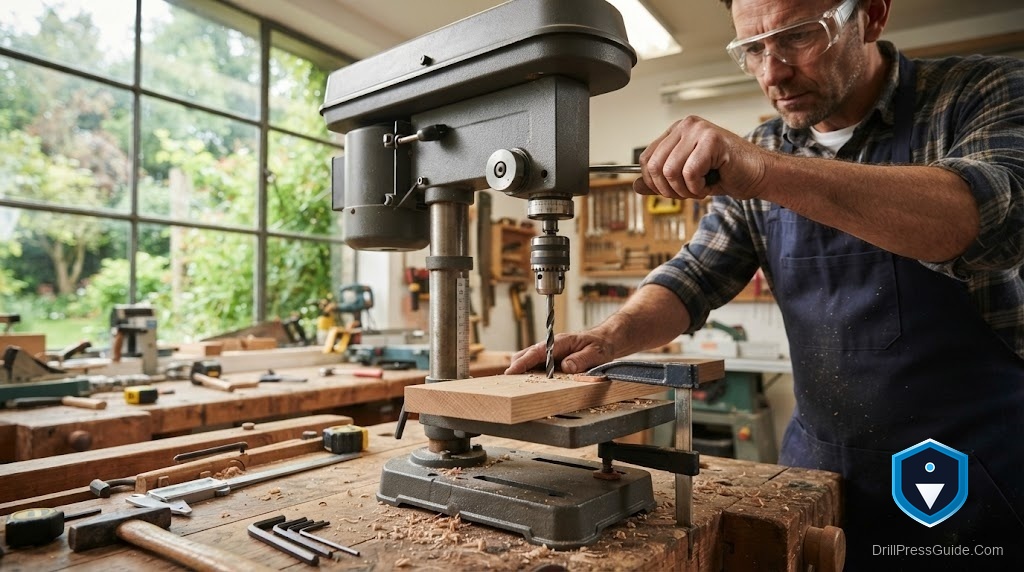
- Clamp the work and wear eye protection, keeping clear of the chuck per OSHA and CCOHS.
Who should skip it
If your shop has room and drilling accuracy is a priority, buy a dedicated press and a real table rather than a combo. If space is the binding constraint and your work is light, a combo makes sense, provided you add a proper drilling top and accept the setup changes.
Bottom line
An all in one table saw drill press trades specialization for space, and the shared table is where the compromise shows on drilling. Judge the drilling side on press terms, and if you buy one, add a real drill press top with a fence, stop, and insert. For accuracy-first drilling, a dedicated press with a proper table remains the stronger choice.
- Combos save space but compromise the drilling surface and rigidity.
- Judge the drilling side on travel, speed, surface, and lock-up.
- Add a proper drill press top with a fence, stop, and insert for accuracy.
FAQ
Is an all-in-one table saw and drill press any good? For a tight shop with light work, yes. For full capacity, fast switching, or precise drilling, a dedicated press usually serves better.
Why is the drilling side a compromise? It shares a frame and often a table with the saw, so its surface, travel, and rigidity are balanced across functions rather than built to drill.
Can I make the drilling side more accurate? Yes. Add a proper drill press top with a fence, stop, and insert, mounted flat and squared to the bit.
What should I check before buying a combo? The drilling surface, spindle travel, speed range, rigidity, and how quickly and often you must switch between functions.
Does a shared table hurt drilling? It can. A saw table lacks the slots, fence, and insert a press table needs, so add a drilling top for repeatable holes.
Combo or two separate machines? Combo for space-limited, light work; separate machines for capacity, accuracy, and no setup changes between jobs.
References
- WEN 24 x 12-Inch Drill Press Table with Adjustable Fence and Stop Block: https://wenproducts.com/products/24-by-12-inch-drill-press-table-with-an-adjustable-fence-and-stop-block-t
- IBUILDIT Drill Press Table Plans: https://ibuildit.ca/plans/drill-press-table/
- Woodsmith Drill Press Table Plan: https://www.woodsmithplans.com/plan/pw-drill-press-table/