
Universal Drill Press 80 AR-15 Jig: What to Measure Before You Buy
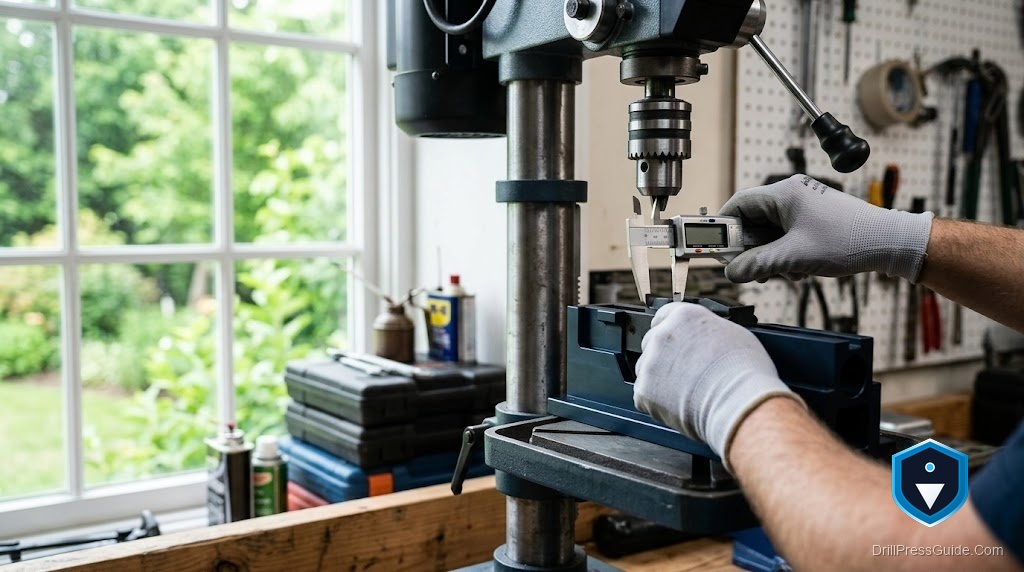
A drill press jig for finishing an 80 percent AR-15 lower is marketed as “universal,” and that word does a lot of hopeful lifting. What people need to know before buying is what the jig actually indexes to, what the drill press has to provide, and whether their machine has the rigidity and travel to do the job accurately. This is a fit-and-capability question, and getting it right matters more here than on almost any other accessory, because a mislocated hole ruins the part.
A jig of this kind clamps the workpiece and guides the drilling and, sometimes, milling operations to precise locations, using a drill press for controlled vertical plunges. “Universal” usually means it adapts to more than one workpiece, not that it fits every drill press. The machine still has to supply the rigidity, the travel, and the hold-down. Those are what you measure.
Short answer: before buying, confirm the jig physically mounts and clamps on your drill press table, that your spindle travel covers the depth the operations require, and that your machine is rigid enough for accurate work. And know the honest limit: a drill press is built for downward drilling, not sideways milling, so any lateral cutting a jig implies is outside what the quill is designed to take.
Understand what the jig indexes to
A jig’s whole value is repeatable location. It references the workpiece to fixed guide points so each hole lands exactly where the design requires. That reference, and the clamping that holds it, comes from the jig. The drill press provides the vertical motion and the power.
So the first question is not about the press at all: does the jig index and clamp your specific workpiece securely? A jig that does not hold the part rigidly will let it shift, and a shifted part is a scrapped part.
What the drill press must supply
Once the jig fits the work, the machine has to fit the jig.
- Table mounting. The jig or its base must clamp solidly to your drill press table so nothing moves.
- Spindle travel. Confirm your quill travels far enough for the depth the operations need.
- Rigidity. A press with worn bearings or a flexy quill will wander; accurate work needs a tight machine.
- Speed. Match the spindle speed to the bit and material for clean, controlled cutting.
The honest limitation
Here is what matters most. A drill press is engineered for straight-down thrust through the quill. It is not a milling machine and its quill is not built for sideways cutting loads. Any operation that asks you to feed the work sideways into a spinning cutter is outside the machine’s design, and doing it invites quill flex, a grabbed bit, and a ruined part or injury. Keep the work to vertical drilling that the jig locates, and treat lateral cutting as a job for a proper mill, not a drill press.
Jig on a drill press versus a milling machine
Against a milling machine, using a jig on a drill press wins on using a tool you already own, and loses on rigidity and on any lateral operation. A mill has a spindle built to take side loads; a drill press does not. For purely vertical, jig-located drilling on a rigid press, the drill press can serve; for anything that involves sideways cutting, the mill is the correct tool. You can compare a drill press vise for secure holding and a drill press hold down clamp to anchor a jig.
Setting it up for accuracy
- Confirm the jig indexes and clamps your workpiece rigidly.
- Clamp the jig or its base solidly to a squared drill press table.
- Check that your spindle travel covers the required depth and that the machine is tight, without excess quill play.
- Set the correct speed for the bit and material, and plunge steadily.
- Keep operations vertical, wear eye protection, and keep hands clear of the chuck, per OSHA and CCOHS. Follow all laws that apply to your work.
Who should skip it
If your press is worn, flexy, or short on travel, or if the job calls for sideways milling, skip the drill press for this and use a rigid machine or a proper mill. If your press is tight, has the travel, and the operations are purely vertical drilling that the jig locates, it can do the job accurately.
Bottom line
A universal drill press jig is a fit-and-capability decision: the jig must index and clamp your workpiece, and your press must supply solid mounting, enough travel, and real rigidity. The hard limit is that a drill press drills straight down and does not mill sideways. Stay inside that limit and a rigid press with a good jig locates holes accurately.
- The jig indexes the work; the drill press supplies vertical motion and power.
- Confirm solid table mounting, adequate spindle travel, and a rigid machine.
- A drill press drills down, not sideways; leave lateral milling to a mill.
FAQ
What does “universal” mean on this kind of jig? Usually that the jig adapts to more than one workpiece, not that it fits every drill press. The machine still has to mount and clamp it.
What does my drill press need to supply? Solid table mounting for the jig, enough spindle travel for the operation depth, real rigidity, and a suitable speed for the bit and material.
Can a drill press do sideways cutting for a jig? No. The quill is built for downward thrust, not side loads. Sideways cutting risks quill flex and a grabbed bit; use a milling machine for that.
Why does jig accuracy depend on my machine? Because a flexy or worn press lets the bit wander. Accurate, jig-located holes need a tight machine and a rigidly clamped jig.
Drill press or milling machine? Drill press for purely vertical, jig-located drilling on a rigid machine; milling machine for anything that involves lateral cutting.
How do I keep the workpiece from shifting? Use a jig that indexes and clamps it rigidly, and anchor the jig to a squared table. A shifted part is a ruined part.
References
- WEN Drill Press FAQs: https://wenproducts.com/pages/drill-press-faqs
- WEN 4214T 12-Inch Variable-Speed Drill Press: https://wenproducts.com/collections/power-tools/products/wen-4214t-12-in-variable-speed-drill-press
- OSHA Woodworking eTool, Drill Press: https://www.osha.gov/etools/woodworking/production/machines-tools/drill-press
- CCOHS, Metalworking Machines - Drill Presses: https://www.ccohs.ca/oshanswers/safety_haz/metalworking/drillpresses.html


