
Woodworking Drill Press Table: What to Measure Before You Buy
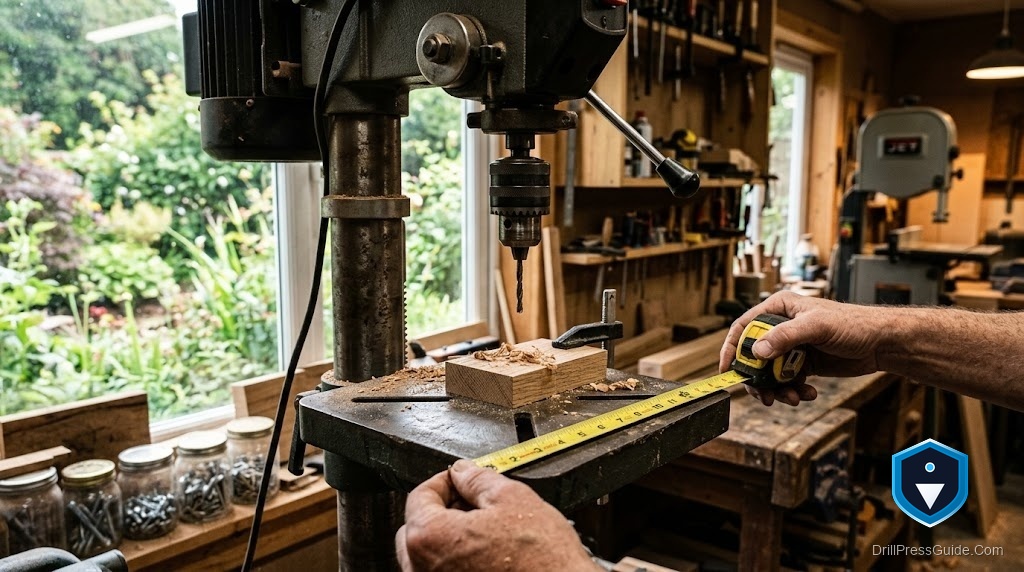
A metal drill press table is designed for machinists, and it shows the moment you try to do woodworking on it. It is small, it has slots and a center hole that swallow small parts, and it offers nothing to register a workpiece against. A woodworking drill press table fixes all of that with a broad flat surface, a fence, a stop, and a replaceable insert. It is one of the highest-value upgrades a wood shop can make, provided you buy one sized to your machine and your work.
A woodworking drill press table is a large flat top, usually MDF or a composite, that mounts on the cast table and adds a fence, a stop block, a removable insert, and often onboard rulers. It gives wood the broad support and registration surfaces the bare cast table lacks. That support and registration is the entire point.
Short answer: buy a woodworking table sized so its top suits your parts, its fence and travel fit your stock, and its added height still leaves you spindle travel. A table matched to your press turns awkward freehand wood drilling into square, repeatable, tear-out-free holes.
What a wood table adds
The bare cast table fights woodwork in three ways, and a wood table answers each.
First, broad flat support holds large panels and long boards that overhang a small cast table. Second, a fence gives a straight edge to register against, so a row of holes lands on a line. Third, a replaceable insert backs the bit where it exits, so the underside of the wood does not blow out, and you simply swap the insert when it wears. Add a stop block and you get repeatable placement across many parts.
The honest limitation: a wood table raises the work surface and the fence steals column clearance. On a short-travel press, a tall workpiece plus the table can run you out of quill, and very long stock may not fit between the fence and the column. Match the table’s size to your machine.
Measure before you buy
- Top size. Bigger supports larger panels but can overhang a small press; match it to your work and machine.
- Fence and travel. Confirm the fence length and how far it adjusts suit your typical stock.
- Added height versus spindle travel. Stack table height plus workpiece and confirm the quill still reaches.
- Mounting. Confirm it bolts to your cast table’s slots or holes.
Buy versus build
Against a shop-built table, a commercial top like the WEN 24-by-12-inch comes ready with a fence, a stop block, and matched hardware, while building from IBUILDIT or Woodsmith plans lets you size the top and place the bolt holes exactly for your press and your work. Buy for convenience, build for a custom fit and the satisfaction of it.
Either way the features that matter are the same: flat support, a fence, a stop, and a replaceable insert. You can compare a ready-made drill press table with fence and stop against drill press table hardware for a build.
Setting it up for clean woodwork
- Square the cast table to the bit before mounting the wood top.
- Bolt the top down flat and evenly so it cannot rock or shift.
- Set the fence and a stop block for repeatable hole placement.
- Position the hole over the insert so the bit exits into support and the underside does not tear out.
- Clamp the work with a hold-down and wear eye protection, keeping clear of the chuck per OSHA and CCOHS.
Who should skip it
If you only drill metal or the occasional single hole, the bare cast table is enough. If you drill wood, especially panels, rows of holes, or parts that must match, a woodworking table pays off on nearly every project.
Bottom line
A woodworking drill press table gives wood the flat support, registration, and blowout protection the cast table cannot. Buy or build one sized to your press and your stock, mind the height against your spindle travel, and set it square. It is one of the best-value upgrades a wood shop can make.
- A wood table adds broad support, a fence, a stop, and a replaceable insert.
- Match the top size, fence, and added height to your press and stock.
- Square the cast table first, then bolt the top down flat.
FAQ
Why use a woodworking table instead of the metal cast table? A wood table adds broad flat support, a fence to register against, and a replaceable insert that backs the bit so the wood does not tear out underneath.
Will a bigger table always be better? Not always. A large top supports panels but can overhang a small press and get in the way. Match the size to your machine and work.
Does the table reduce drilling depth? Yes. It raises the work surface, so confirm your spindle travel covers your tallest parts before buying.
Should I buy or build one? Buy for convenience and matched hardware; build from plans for a custom size and exact bolt placement. Both need a fence, stop, and insert.
How do I stop wood blowing out underneath? Drill over the replaceable insert so the bit exits into support, and swap the insert when it wears.
Do I still clamp the work? Yes. Use a fence, stop, and hold-down, and keep hands clear of the chuck, as OSHA and CCOHS advise.
References
- WEN 24 x 12-Inch Drill Press Table with Adjustable Fence and Stop Block: https://wenproducts.com/products/24-by-12-inch-drill-press-table-with-an-adjustable-fence-and-stop-block-t
- IBUILDIT Drill Press Table Plans: https://ibuildit.ca/plans/drill-press-table/
- Woodsmith Drill Press Table Plan: https://www.woodsmithplans.com/plan/pw-drill-press-table/


