
Choosing a Drill Press Mill Table: Reading the Fit Before You Buy
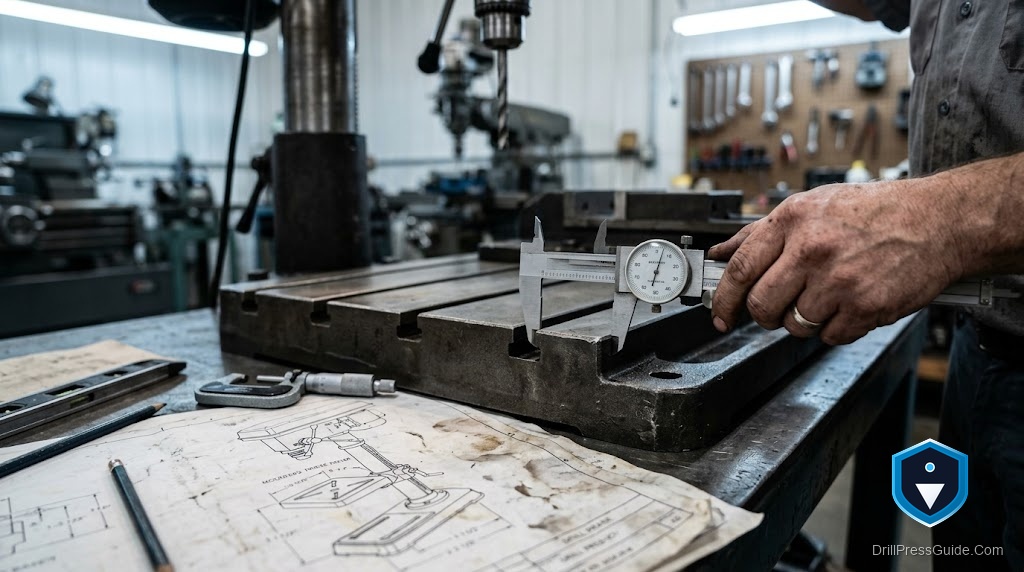
I have watched more than one person unbox a shiny X-Y mill table, lift it toward their drill press, and then just stand there. It does not bolt on. The slots do not line up, the thing is heavier than the factory table can carry, and the handwheels hit the column. A drill press mill table is one of the most useful accessories you can add, but only if you read the fit before you buy. Nearly every disappointment with these tables traces back to a measurement nobody took.
So let me help you buy the right one the first time.
What a mill table is, and what it is for
A drill press mill table, also called an X-Y table or a compound cross slide, is a metal platform with two handwheels that move the top precisely along two axes. You clamp your workpiece to it and dial in exact positions for drilling hole patterns, bolt circles, and repeatable layouts. Used this way, it is superb, and it is the reason I recommend one to anyone doing precise drilling. As I have said in my other guides, treat it as a precision positioning tool rather than a license to mill, because a drill press spindle is built for downward thrust, not the side load real milling demands.
Fit check one: the mounting footprint
Start with how the table attaches. Flip your intention around and look at your drill press table’s slots, their width, their spacing, and the overall usable surface. An X-Y table bolts down through its base into those slots, and if the base bolt pattern cannot line up with your slots, you cannot secure it. Measure the slot width and the distance between slots, then check the table’s base against those numbers.
A compact, widely compatible option like the Proxxon KT 70 compound table suits small benchtop machines because its footprint is modest and it does not overwhelm a little table. Confirm the base can be clamped or bolted to your specific slots before committing.
Fit check two: weight your table can carry
Here is a limit people forget. An X-Y table is heavy cast iron or steel, and your drill press table has to support that weight plus the workpiece plus cutting force, all cantilevered off the column. A light benchtop table can sag or flex under a big compound slide. Match the table’s mass to your machine. A small press wants a small, light table like the Proxxon; a larger floor machine can carry a heavier unit.
Fit check three: travel versus your work
Travel is how far the top moves in each axis. It sets the largest hole pattern you can reach without re-clamping. For small parts, a short-travel table is fine and more rigid. For wider layouts, you need more travel, and you should confirm the numbers rather than guessing. A mid-size table such as the Vevor 2-axis cross slide table offers more travel and T-slots for clamping, which suits larger workpieces, while a heavier Grizzly compound table gives still more capacity for a big machine.
Fit check four: clearance under the quill
The fourth measurement, and the one most often missed, is height. An X-Y table raises your workpiece several inches off the drill press table. That stolen height eats into your quill travel and the gap between the table and the chuck. Measure the table’s height, then confirm your machine still has enough room to fit your tallest workpiece and longest bit under the chuck with the table in place. On a short benchtop press, a tall X-Y table can leave you unable to fit the work at all.
Backlash and quality: what separates good from frustrating
Once fit is settled, quality lives in the handwheels and the ways. Backlash, the slop before the table moves when you reverse a handwheel, is the number one complaint on budget tables. A little is normal; a lot makes precise positioning maddening. Look for adjustable gibs that let you snug up the ways and reduce play. Smooth, clearly marked handwheels and a flat, well-machined top round out a table worth owning. Cheap castings with rough ways bind on chips and never move smoothly, which is the quiet flaw that turns a bargain into regret.
Verdict
A drill press mill table is a genuinely valuable upgrade for precise, repeatable drilling, but the buying decision is really four measurements: the mounting footprint, the weight your table can carry, the travel your work needs, and the clearance under the quill. Get those right and pick a unit with adjustable gibs to control backlash, and you will have an accessory you reach for constantly. Skip the measuring and you will have an expensive doorstop.
- An X-Y mill table excels at precise hole positioning, not at true milling.
- Confirm the base bolt pattern lines up with your drill press table slots before buying.
- Match the table’s weight and height to your machine so it does not sag or steal all your quill travel.
- Choose a table with adjustable gibs to control backlash and get smooth, accurate movement.
FAQ
What is a drill press mill table used for? It is an X-Y platform that moves the workpiece precisely along two axes, letting you drill accurate hole patterns and bolt circles without re-marking or re-clamping. It is a precision positioning tool for drilling.
Can I mill with a drill press mill table? Not safely for real milling. A drill press spindle is built for downward thrust, not the side load milling creates. Use the table for precise drilling and light positioning, not slotting and profiling metal.
How do I know a mill table will bolt to my drill press? Measure your table’s slot width and spacing, then check the mill table’s base bolt pattern against those numbers. If the base cannot line up with your slots, you cannot secure it properly.
Will an X-Y table fit under my quill? Only if you measure the height. These tables raise the workpiece several inches, eating quill travel and the gap to the chuck. Confirm your tallest workpiece and longest bit still fit with the table installed.
What is backlash, and why does it matter? Backlash is the slop before the top moves when you reverse a handwheel. Too much makes precise positioning frustrating. Look for adjustable gibs so you can tighten the ways and minimize play.
Is a heavier mill table always better? No. A heavy table can sag or overload a light benchtop drill press table. Match the mass to your machine: small and light for benchtop presses, heavier units for sturdy floor machines.
How much travel do I need? Enough to cover your largest hole pattern without re-clamping. Short travel is more rigid and fine for small parts, while wider layouts need more travel, so check the axis numbers against your typical work.
References
- Proxxon, KT 70 compound table specifications, proxxon.com
- Vevor, 2-axis cross slide table documentation, vevor.com
- Grizzly Industrial, compound cross slide table specifications, grizzly.com
- Machinery’s Handbook, workholding and spindle load reference, Industrial Press


