
Getting Cast Iron Drill Press Replacement Table Right: Fit, Tools, and Final Checks
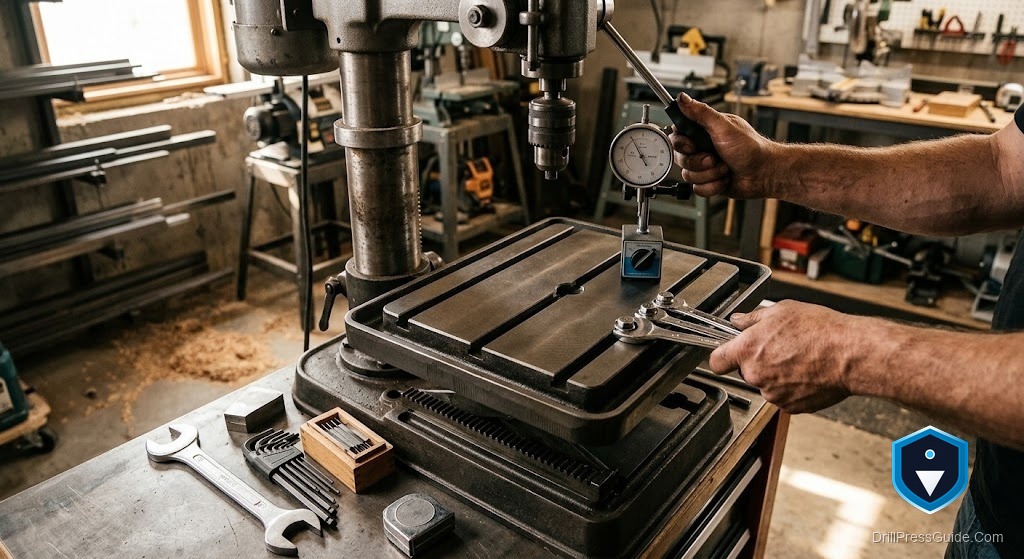
Cast iron is what makes a drill press table flat, heavy, and dead stable, which is exactly why owners want cast iron when a table cracks or wears out. Getting a cast iron drill press replacement table right comes down to matching it to your column and confirming it sits flat and square, because a heavy table that is mounted crooked is worse than the worn one you removed.
A cast iron replacement table is the flat, rigid work surface that clamps to the column and supports your work. Cast iron resists flex and damps vibration, so a correct replacement matches your column diameter and mounting while giving you a true, flat surface.
Short answer: measure your column diameter and confirm the mounting style, then fit a cast iron or cast-surface replacement that matches, level and square it to a rod in the chuck, and lock it. Expect that an exact OEM casting may be discontinued, so a compatible or upgrade table is often the realistic path.
Fit: match the column and mounting
- Column diameter. Measure it precisely; the table collar must match.
- Mounting style. Some tables clamp around the column, others bolt to a trunnion. Match yours.
- Size and load. A larger table adds support but also weight and height; confirm it suits your press.
- Availability. On older presses the exact casting is often gone, so plan for a compatible replacement.
Tools and the table itself
When the original cast table is unavailable, a rigid compound table that clamps to the column is a common replacement and upgrade. A cross-slide drill press table with clamping and adjustable travel gives you a heavy, flat, movable surface and suits the steadier work a rigid table is meant for. Confirm the column fit and travel before ordering.
The honest drawback: a compound table sits higher and adds weight, reducing usable quill travel, and it is not a bolt-for-bolt match to an OEM casting. Who should skip it: anyone whose original cast table is sound and only needs the trunnion cleaned and tightened.
Final checks
- Column collar matches the diameter and locks firmly.
- Surface flat, checked with a straightedge.
- Square to a rod in the chuck in both directions.
- Quill travel still adequate above the raised surface.
- Table holds position under a test load before you trust it.
Match the column, then level and square
A cast iron replacement table is worth the weight only when it fits your column and sits flat and square. Measure the column, match the mounting, level the surface, and square it to the spindle. With OEM castings often gone, a compatible rigid table is usually the right call.
Three takeaways:
- Measure the column diameter and match the mounting before buying.
- Confirm flat and square after mounting; a crooked heavy table is worse than a worn one.
- Expect a compatible or upgrade table when the OEM casting is discontinued.
FAQ
Can I replace a drill press table with cast iron? Yes, if you match the column diameter and mounting. When the OEM casting is discontinued, a compatible rigid or compound table is the usual replacement.
Why choose cast iron or a rigid table? It is flat, heavy, and damps vibration, which keeps work steady and holes true. That rigidity is the reason it is preferred over light stamped tables.
What do I measure first? The column diameter, since the table collar must match it. Then confirm the mounting style and your quill travel headroom.
Will a heavier table fit my press? Many clamp to standard columns, but the added height and weight reduce usable travel. Confirm the fit and travel before buying.
How do I make sure it is flat and square? Check flatness with a straightedge and square it to a rod in the chuck in both directions before locking it down.
Is an exact OEM table available? Often not, on older presses. A compatible or upgrade table that matches your column is usually the realistic choice.
References
- VintageMachinery.org, drill press table and column documentation: http://vintagemachinery.org


