How to Fix Drill Holes in a Drill Press Table: Setup, Checks, and Common Mistakes
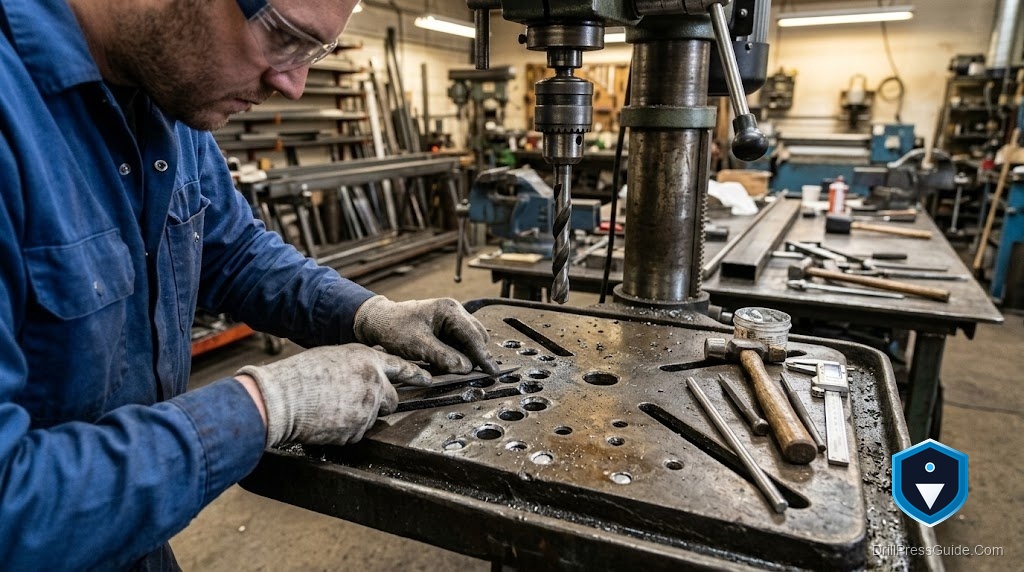
Every drill press table eventually collects a scatter of drilled through holes, the marks of years of work where bits broke through into the cast surface. Beyond looking rough, those holes and the raised burrs around them stop workpieces sitting flat, which quietly ruins accuracy on the next job. Learning how to fix drill holes in a drill press table is less about filling craters and more about restoring a flat, supportive surface and setting up so you stop making new ones. The fix and the prevention go together.
The table is the flat cast surface, usually iron, that supports the workpiece under the spindle. Drilled through holes leave both a void and a raised burr around the rim, and it is the burr and the lost flatness, more than the hole, that spoil support for the next piece.
The direct answer: knock down the raised burrs around the holes so the surface is flat again, fit a sacrificial backing over the table to bridge the holes, and set up with a backer board and correct clamping so you stop drilling into the table. Fixing the surface and preventing new holes are one job.
Fix the surface first
With the press unplugged:
- Knock down the burrs. Raised metal around each hole is what stops work sitting flat. Dress it flush with a fine flat file or a stone.
- Clean off rust and grime with a rust remover and abrasive pad so the surface is true and smooth.
- Check flatness with a straightedge across the table. Deburring restores support even with the holes present.
Bridge the holes with a sacrificial top
The practical, reversible fix is a sacrificial surface, not filler:
- Add a replaceable table top. A shop made plywood or MDF top, or a drill press table with fence, bolts over the cast table and gives a fresh flat surface that bridges every hole.
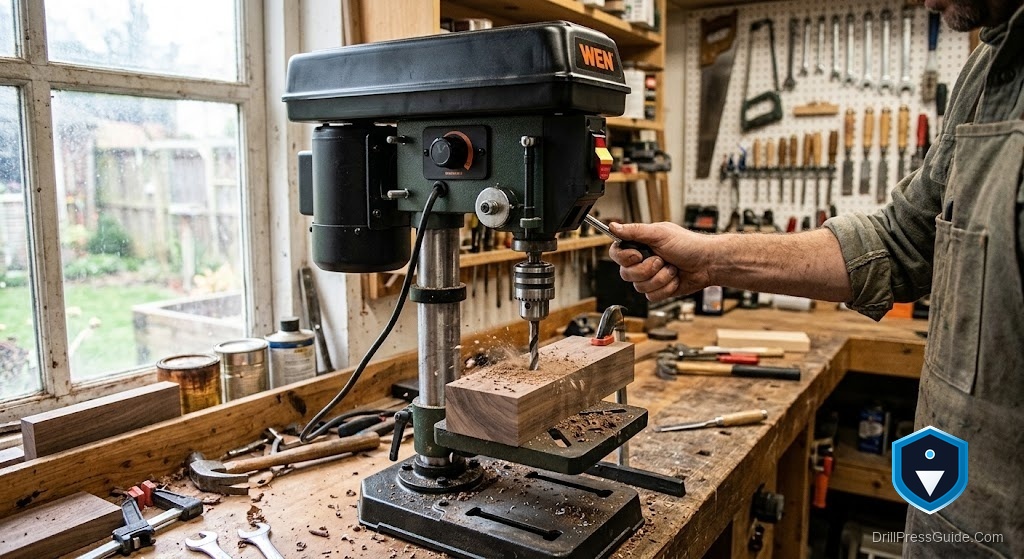
- Use a backer board for through drilling so bits break out into the board, not the cast table.
Set up to stop drilling the table
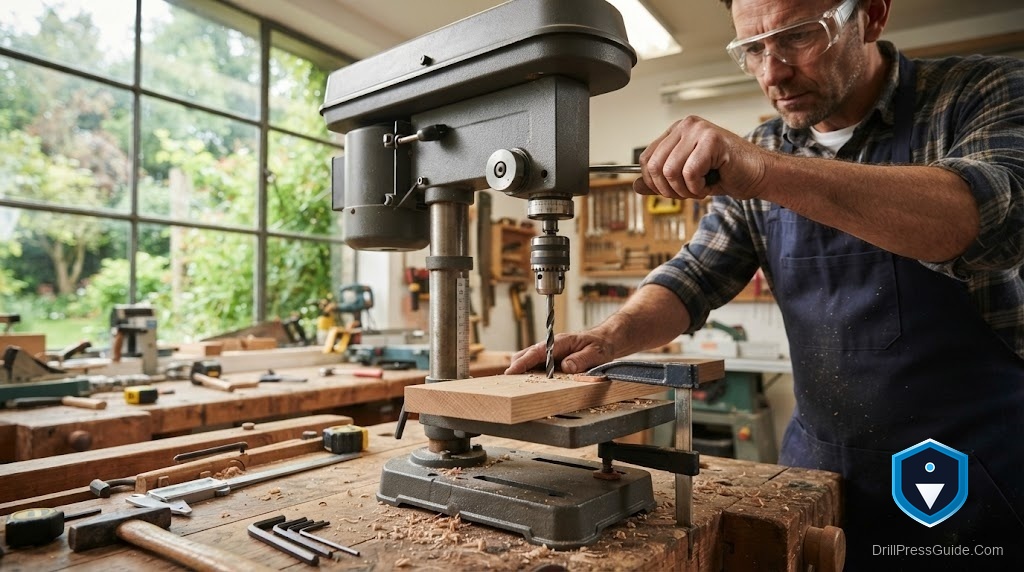
- Always place a backer board under the workpiece for through holes.
- Set the depth stop so the bit stops just past the workpiece, not deep into the table.
- Clamp the work with a drill press clamp or vise so it does not shift.
Where people go wrong
The first mistake is filling the holes with epoxy or metal filler that soon breaks loose and does nothing for flatness. The second is ignoring the raised burrs, so work still rocks even after cleaning. The third is fixing the surface but skipping the backer board and depth stop, so fresh holes appear within a week.
The verdict
Fixing drill holes in a press table is really about flatness and prevention, not filling. Deburr the raised rims so the surface supports work again, clean off rust, and bridge the holes with a sacrificial top rather than filler. Then set up with a backer board, a set depth stop, and proper clamping so you stop drilling into the table. Do both halves and the table supports work dead flat again, and stays that way.
Three takeaways:
- Deburr the raised rims; the burr spoils flatness, not the hole.
- Bridge holes with a sacrificial top, not filler.
- Use a backer board and depth stop to stop new holes.
FAQ
How do I fix drilled holes in a drill press table? Knock down the raised burrs so the surface is flat, clean off rust, and fit a sacrificial top that bridges the holes. Then set up with a backer board and depth stop so you stop drilling new ones.
Should I fill the holes with epoxy or metal? Generally no. Filler soon breaks loose and does nothing for flatness. A sacrificial top over the table is more reliable and reversible.
Why does my workpiece rock even after cleaning? Raised burrs around the holes. Dress them flush with a file or stone so the cast surface is flat and supports the work.
What is a sacrificial table top? A replaceable plywood or MDF surface, or an add on table, bolted over the cast table. It gives a fresh flat surface and takes the drill breakout instead of the cast iron.
How do I stop drilling into the table? Always use a backer board under the work for through holes, set the depth stop so the bit stops just past the workpiece, and clamp the work so it cannot shift.
Can I resurface the cast table itself? You can deburr and clean it flat, but machining a cast table is rarely worth it. A sacrificial top is the practical route to a fresh surface.
Do the holes weaken the table? Rarely in any meaningful way. The real problem is lost flatness and burrs spoiling support, which deburring and a sacrificial top solve.
References
- Occupational Safety and Health Administration, Woodworking eTool: Drill Presses. https://www.osha.gov/etools/woodworking/production/machines-tools/drill-press
- Canadian Centre for Occupational Health and Safety, Drill Presses. https://www.ccohs.ca/oshanswers/safety_haz/metalworking/drillpresses.html