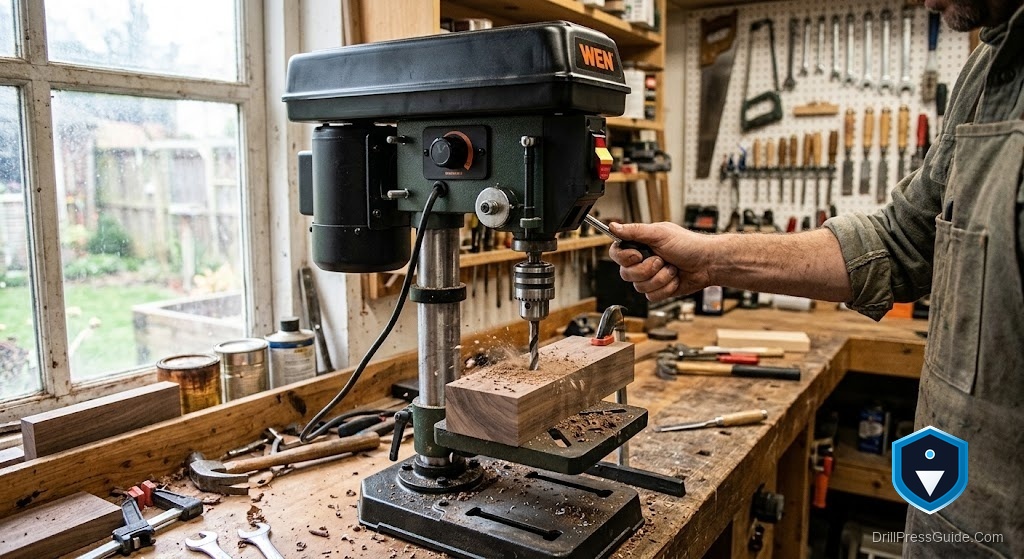
DIY Drill Press Stand with Storage: A Build Plan Focused on Accuracy
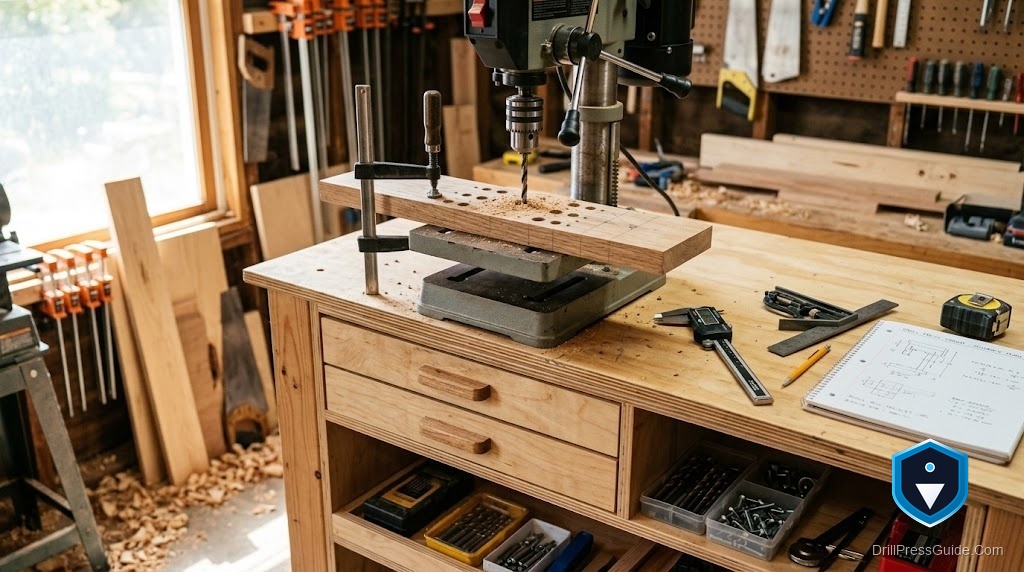
A drill press stand that also holds your bits, chucks, keys, and accessories is one of the tidiest upgrades in a shop, keeping everything you reach for right where you use it. But adding drawers and shelves must not come at the cost of the one thing the stand exists for: a rigid, stable base that lets the machine drill accurately. The trick is building storage into the structure in a way that adds rigidity and useful low mass rather than hollowing it out. This plan keeps accuracy first while working the storage in.
A DIY drill press stand with storage is a shop-built floor stand that raises a benchtop drill press to a comfortable height on a rigid base while incorporating drawers, shelves, or cabinets for bits and accessories. An accuracy-focused build means a frame that stays rigid and square, a footprint wider than the machine, storage that adds low mass without weakening the structure, a flat solid top, and the machine bolted down square.
Short answer: build a rigid, braced frame sized to your working height with a wide footprint, then work drawers and shelves into it so they add mass low down and do not compromise the bracing, fit a thick flat top, and bolt the machine down, then level and verify. Storage is a bonus layered onto a structure whose first job is rigidity, so the frame comes first and the storage fits around it.
Design the structure first, storage second
The order of thinking matters: design a rigid stand first, then fit storage into it, rather than designing a cabinet and hoping it is rigid. Set the height so the chuck and table land where you work comfortably standing, and make the footprint wider than the drill press base in both directions, since the machine is top-heavy. Plan a braced frame, then decide where drawers and shelves can go without cutting through the braces or leaving the structure open on the sides that need to resist racking. Storage placed thoughtfully within a rigid frame keeps both goals, while storage that dictates the structure often produces a wobbly cabinet, so let rigidity lead the design.
Keep the frame rigid and square
The frame is where accuracy is won, so build it to resist racking whether or not it holds storage. Use dimensional lumber or thick plywood, glue and screw every joint, and add diagonal braces or corner gussets, keeping in mind that a cabinet full of drawer openings can lose the diagonal bracing a plain frame relies on. Compensate by using a solid back panel, which stiffens a cabinet against racking, and by keeping the case joints tight and glued. Test the finished frame by shoving it, it should stay dead square. A storage stand that stays rigid because its case and back panel do the bracing work is what keeps the machine drilling accurately, so do not let drawer openings quietly weaken it.
Use storage to add low mass and a solid top
Here is where storage actively helps accuracy: filling lower drawers and shelves with bits, chucks, and tools puts weight low in the stand, and low mass damps vibration and resists tipping, both of which protect accuracy for a top-heavy machine. So place the heaviest storage low and keep the upper structure lighter. Top the stand with a thick, flat mounting surface, laminated plywood or a steel plate, sized for the machine’s base and flat enough that the press seats fully without rocking. Loaded low and topped solidly, the storage stand becomes a genuinely steady platform, turning what could have been dead weight to justify into a real accuracy advantage.
Mount, level, and verify
Finish by mounting and proving it steady. Bolt the drill press to the top through its base holes so it is held square and immovable, never by friction. Stand the finished stand on the floor, level it, and shim the feet so it does not rock and the machine sits true, remembering that a loaded storage stand is heavy, so position it before filling the drawers. Lean on the machine hard to confirm the whole assembly is solid, square the table to the bit, and drill a test hole. Re-check level, bolt tightness, and squareness over time as wood moves and the load settles. This verification is what turns a good-looking storage stand into an accurate machine base, so treat it as the final build step.
Conclusion
A DIY drill press stand with storage gives you a tidy shop and a steady machine at once, as long as accuracy leads the design. Build a rigid, braced frame first, sized to your working height with a wide footprint, then fit drawers and shelves into it without cutting through the bracing, using a solid back panel to keep the case from racking. Load the heaviest storage low so it adds vibration-damping mass, top the stand with a thick flat surface, and bolt the machine down, then level and verify. Done this way, the storage is not a compromise but an asset, and the stand both organizes your tools and gives the drill press the rigid, stable base accurate drilling depends on.
Frequently asked questions
Can a storage stand still be rigid enough for accurate drilling? Yes, if you design the rigid frame first and fit storage into it. A solid back panel and tight, glued case joints replace the diagonal bracing that drawer openings can remove, keeping it square.
Does the storage help or hurt accuracy? It can help. Filling lower drawers and shelves with heavy tools puts mass low in the stand, which damps vibration and resists tipping, both of which protect accuracy for a top-heavy machine.
How do I keep drawer openings from weakening the frame? Use a solid back panel to stiffen the case against racking, keep case joints tight and glued, and avoid cutting through corner bracing. Then test the finished frame by shoving it to confirm it stays square.
Where should heavy items go? Low in the stand, in bottom drawers and shelves, so the weight sits near the floor. Keep the upper structure lighter to lower the center of gravity of a top-heavy machine.
How should the machine mount? Bolted through its base holes to a thick, flat top so it seats fully and cannot rock. Friction alone lets the machine shift under load and drill inaccurately.
Should I fill the drawers before or after positioning it? After. A loaded storage stand is heavy, so level and position it first, then fill the drawers, and re-check level and squareness over time as the load and wood settle.
References
- Forest Products Laboratory, wood construction references, fpl.fs.usda.gov
- OSHA, Machine Guarding eTool: Drill Presses, osha.gov