Planning a Benchtop Drill Press Stand: What the Drawings Need to Show
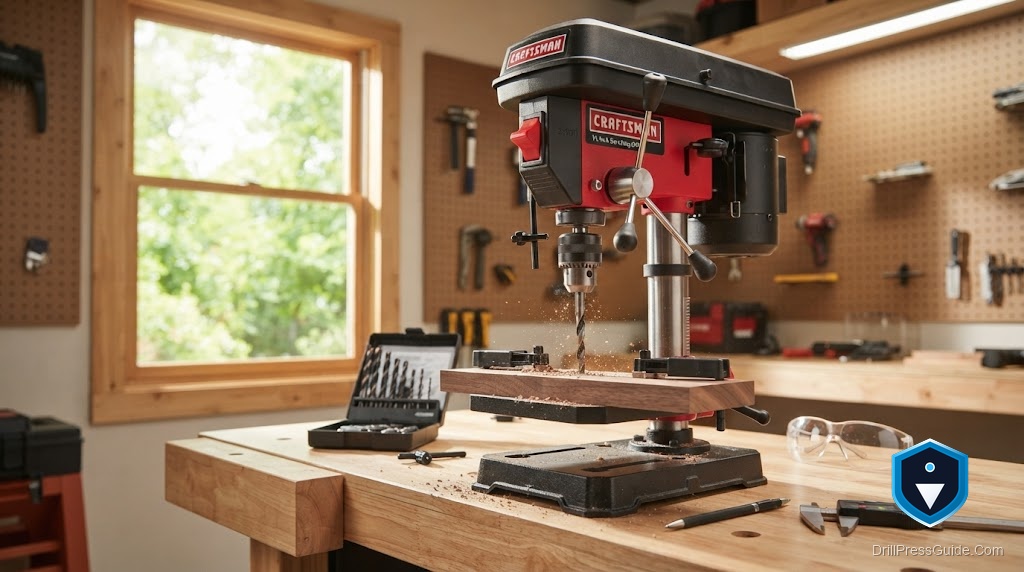
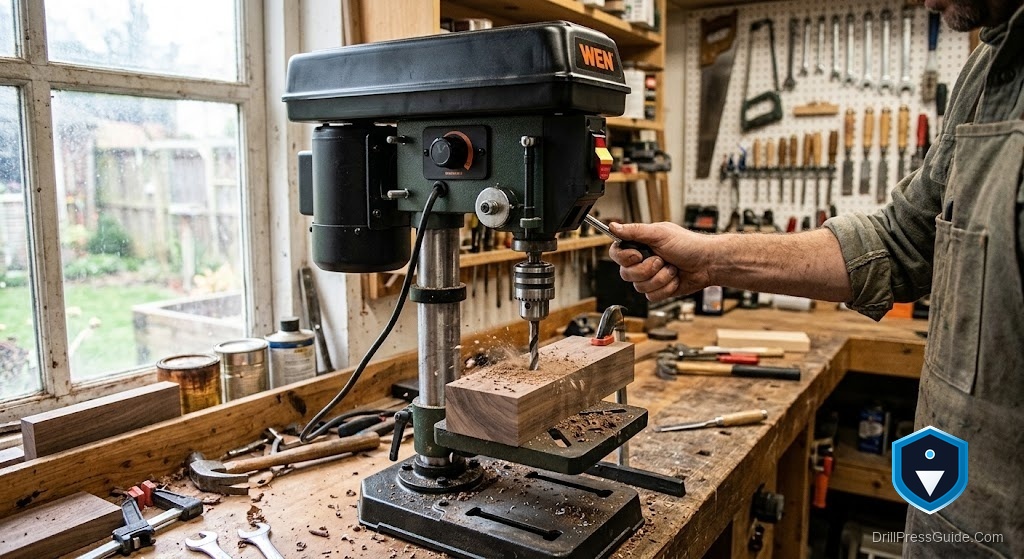
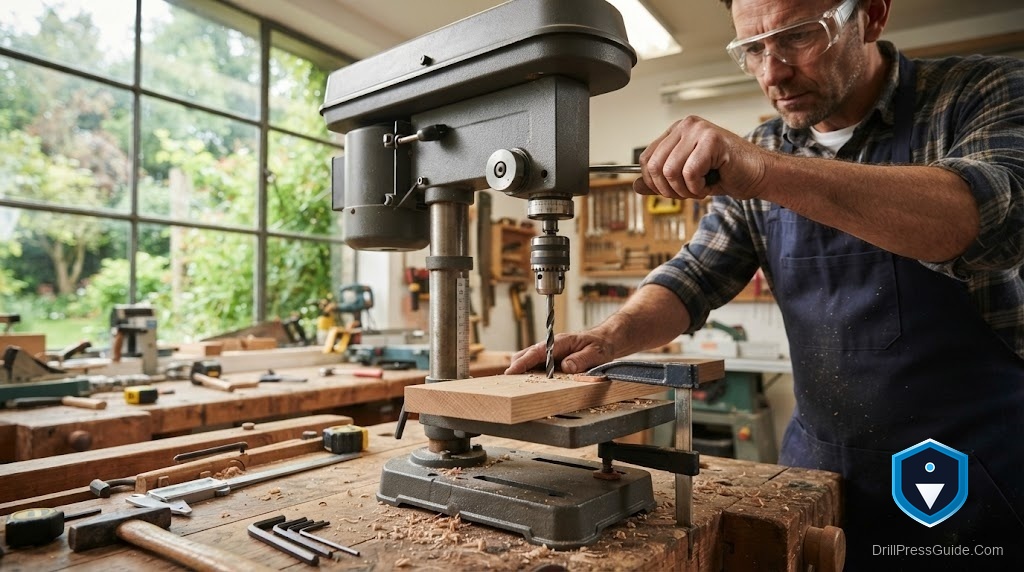
A benchtop drill press packs real capability into a small footprint, and a stand unlocks it, raising the machine to a comfortable height on a base rigid enough to drill accurately. But a benchtop machine on a stand has its own quirks, its limited drilling height and its top-heaviness, that good plans must address. The difference between a stand that steadies the machine and one that makes it tippy or awkward comes down to details the drawings need to show. Here is what a solid benchtop stand plan should include.
A benchtop drill press stand is a shop-built floor stand that a benchtop drill press bolts to, raising it to a comfortable working height on a rigid, stable base. Useful drawings need to show sizing to the user and machine, a frame that will not rack, a footprint wider than the machine, mass kept low, a flat solid mounting top, and how the machine bolts down square.
Short answer: the drawings need to show a height set to your working position, a footprint wider than the benchtop machine’s base, a braced frame that will not rack, a low shelf for mass, a thick flat mounting top, and solid bolted mounting, plus leveling. Because a benchtop machine is top-heavy and its stand must not add wobble, the drawings should make the wide base, rigidity, and low mass explicit.
Show the sizing: height and footprint
The drawings must first show sizing driven by the user and the machine, not a generic figure. They should let you set the height so the chuck and table land where you work comfortably standing, since a stand at the wrong height is a daily annoyance. And they must show a footprint wider than the benchtop machine’s base in both directions, because a benchtop press is top-heavy and a narrow stand invites tipping. The plan should show the machine centered on that footprint. Drawings that show sizing to your stance and a base wider than the machine produce a stand that is both comfortable and stable, which is why the sizing details come first.
Show a frame that will not rack
The drawings need to show how the frame resists racking, the twist that lets a square stand lean under side load, because that is where accuracy is won or lost. Look for dimensional lumber, thick plywood, or welded steel, with every joint glued and screwed or welded, and, critically, diagonal braces or corner gussets, since a plain four-legged box racks while a braced one stays square. The drawings should show stout legs that do not flex. A benchtop machine transmits drilling force into the stand, so drawings that clearly show bracing against racking are essential, because a frame that stays dead square is the single biggest contributor to the machine drilling accurately.
Show low mass and a solid top
The drawings need to show a lower shelf built into the frame, both for storage and, importantly, to carry weight near the floor, since low mass damps vibration and resists tipping, both of which matter more for a top-heavy benchtop machine. They should show a thick, flat mounting top, laminated plywood or a steel plate, sized for the machine’s base and flat enough that the press seats fully without rocking. The drawings should make clear the top is flat and solid, because a rocking machine on a flexy top moves under load and spoils holes. Drawings that show low mass and a solid top turn a rigid frame into a genuinely steady platform for the machine.
Show mounting, leveling, and verification
Finally, the drawings need to show how the machine mounts and how the stand is made steady, not just the structure. They should show the drill press bolted to the top through its base holes so it is held square and immovable, never by friction. They should show leveling the finished stand, with adjustable feet or shims so it does not rock on an uneven floor, and a step to confirm the whole assembly is solid, square the table, and drill a test hole. Drawings that include mounting, leveling, and verification produce an accurate stand, because a well-built frame that is mounted loosely or left rocking still lets a benchtop machine drill inaccurately.
Conclusion
Planning a benchtop drill press stand is about making sure the drawings show what actually matters: sizing to your working height, a footprint wider than the top-heavy machine, a braced frame that will not rack, a low shelf for mass, a thick flat mounting top, and solid bolted mounting with leveling and verification. A stand that is comfortable but tippy, or rigid but rocking, fails the machine. Insist on drawings that show a wide base, real rigidity, low mass, and solid mounting, and you can build a stand that gives a benchtop drill press the steady, square, comfortable base it needs to drill as accurately as it was designed to.
Frequently asked questions
What should a benchtop drill press stand plan show? Sizing to your working height, a footprint wider than the machine, a braced frame that will not rack, a lower shelf for mass, a thick flat mounting top, and solid bolted mounting with leveling.
Why does a benchtop machine need a wider base? Because a benchtop press is top-heavy, and a narrow stand invites tipping. The drawings should show a footprint wider than the machine’s base in both directions, with the machine centered.
How should the drawings show the frame? With braced joints and diagonal braces or corner gussets that resist racking, plus stout legs that do not flex, since a frame that stays square is the biggest contributor to accurate drilling.
Why keep mass low? Mass near the floor damps vibration and resists tipping, which matters more for a top-heavy benchtop machine. That is why the drawings should show a lower shelf and may suggest ballast.
How should the machine mount to the stand? Bolted through its base holes to a thick, flat top so it seats fully and cannot rock. Friction alone lets the machine shift under load and drill inaccurately.
Do the drawings need a leveling step? Yes. They should show leveling the finished stand with adjustable feet or shims so it does not rock, then confirming it is solid, squaring the table, and drilling a test hole.
References
- Forest Products Laboratory, wood construction references, fpl.fs.usda.gov
- OSHA, Machine Guarding eTool: Drill Presses, osha.gov