
Building a DIY Metal Drill Press Stand That Stays Square and Useful
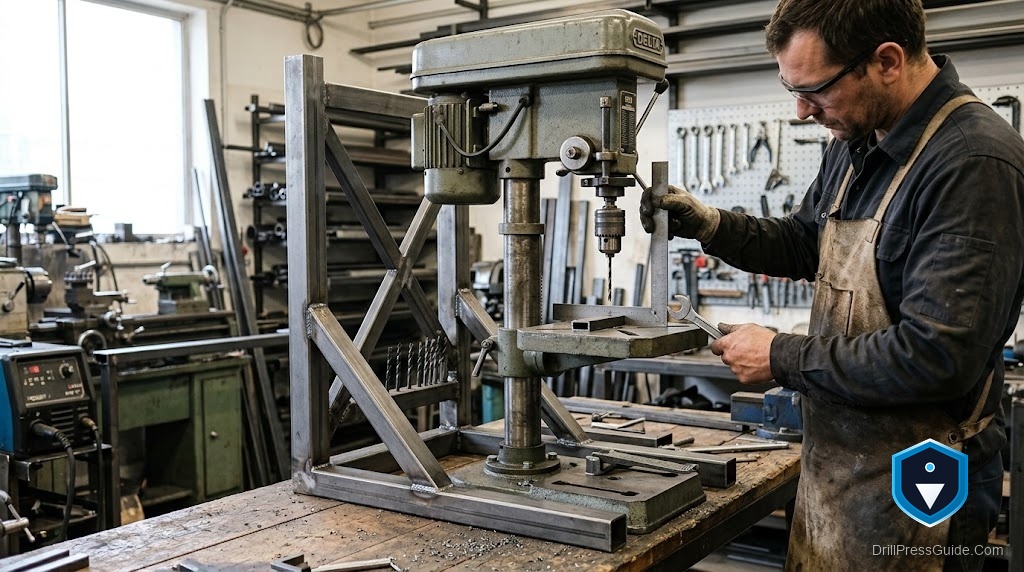
Wood is the usual material for a shop-built drill press stand, but steel has real advantages: it is stiffer for its size, adds useful mass down low, and shrugs off the vibration and load of heavier drilling. A welded metal stand can be more rigid and more stable than a wooden one, which is exactly what a drill press needs. The catch is that steel is unforgiving, an out-of-square weld stays out of square, so building a metal stand that stays square and useful is about welding accurately and bracing well.
A DIY metal drill press stand is a welded or bolted steel floor stand that a benchtop drill press mounts to, raising it to a comfortable working height on a rigid, stable base. Building one that stays square and useful means a frame welded square and braced against racking, a footprint wider than the machine, mass kept low, a flat solid mounting plate, and the machine bolted down square.
Short answer: build a steel frame welded truly square and braced so it cannot rack, with a footprint wider than the drill press base, weight kept low, and a flat top plate the machine bolts to. Steel gives excellent rigidity and mass, but only if the frame is welded square and stays square, so accurate fabrication and good bracing are what make a metal stand pay off.
Design for a wide base and low mass
Start with dimensions that suit a top-heavy machine. Set the height so the chuck and table sit at a comfortable working position for you standing, and make the footprint wider than the drill press base in both directions so the machine cannot tip. Plan a lower shelf or cross members that let you keep weight low, which steel does well since the metal itself adds useful mass near the floor to damp vibration. Design the frame from suitable steel section, box tube or angle, sized so the legs and top do not flex. Getting the base wide and the mass low in the design is what makes the finished steel stand stable, so settle these before cutting metal.
Weld it square and brace against racking
The defining challenge of a metal stand is welding it square and keeping it there, because steel does not forgive an out-of-square joint the way you can shim wood. Cut the members accurately, clamp and check the frame square with a reliable square before tacking, and confirm squareness again as you weld, since welding heat can pull joints out of true. Add diagonal braces or gusset plates at the corners, because a plain welded box still racks under side load while a braced one stays rigid. A frame welded truly square and braced against racking is the whole point of choosing steel, so take the time to fabricate accurately rather than fast.
Fit a flat mounting plate
Top the frame with a flat steel plate the drill press bolts to, thick enough not to flex and welded on flat so the machine seats fully without rocking. Drill mounting holes in the plate to match the drill press base, and check the plate sits truly flat and level relative to the frame, since a warped or tilted plate puts the machine out of square no matter how good the frame is. If you prefer, a thick flat plate can be bolted rather than welded so it can be trued up. A flat, solid mounting plate is what transfers the frame’s rigidity to the machine, so make it flat and mount the press to it squarely.
Mount, level, and verify
Bolt the drill press to the plate through its base holes so it is held square and immovable, never by friction. Stand the finished stand on the floor and level it, adding adjustable feet or shims so it does not rock on an uneven surface, which steel stands are prone to since they do not flex to conform. Lean on the machine hard to confirm the whole assembly is rock solid, square the table to the bit, and drill a test hole. Re-check bolt tightness over time, as vibration can loosen fasteners on a rigid steel frame. Mounting solidly and verifying steadiness is what turns an accurately welded frame into an accurate, useful machine stand.
Conclusion
A DIY metal drill press stand rewards the effort of working in steel with excellent rigidity, useful low mass, and durability, provided it stays square and useful. Design a wide base with low mass, weld the frame truly square and brace it against racking, fit a flat solid mounting plate, and bolt the machine down square, then level and verify the whole thing is rock solid. Because steel is unforgiving, accurate fabrication and good bracing are the keys, and adjustable feet handle its tendency to rock on uneven floors. Built this way, a metal stand gives the drill press a steadier, more rigid base than most wooden stands, which is precisely why it is worth building in steel.
Frequently asked questions
Why build a drill press stand from metal? Steel is stiffer for its size, adds useful mass low down, and shrugs off vibration and heavier loads, giving a more rigid, stable base than most wooden stands when welded square.
What is the main challenge with a metal stand? Welding it square and keeping it square, since steel does not forgive an out-of-square joint the way shimming forgives wood. Accurate cutting, clamping, and checking before and during welding are essential.
How do I stop it racking? Add diagonal braces or corner gusset plates, because a plain welded box still racks under side load. A braced frame stays rigid, which is what keeps the machine drilling square.
How wide should the base be? Wider than the drill press base in both directions, with weight kept low, so a top-heavy machine cannot tip. Steel’s own mass near the floor helps damp vibration.
How do I mount the machine? Bolt it through its base holes to a flat, thick steel plate that is flat and level relative to the frame. A warped or tilted plate puts the machine out of square regardless of the frame.
Does a steel stand need leveling? Yes, and often adjustable feet, because a rigid steel stand does not flex to conform to an uneven floor and will rock. Level it, verify it is solid, and re-check bolts as vibration can loosen them.
References
- American Institute of Steel Construction, steel fabrication references, aisc.org
- OSHA, Machine Guarding eTool: Drill Presses, osha.gov


