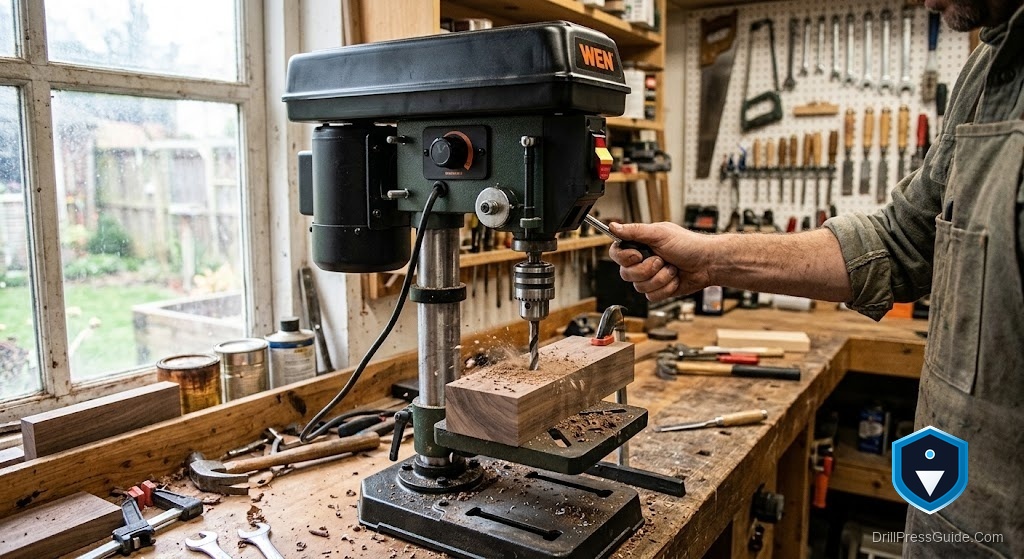
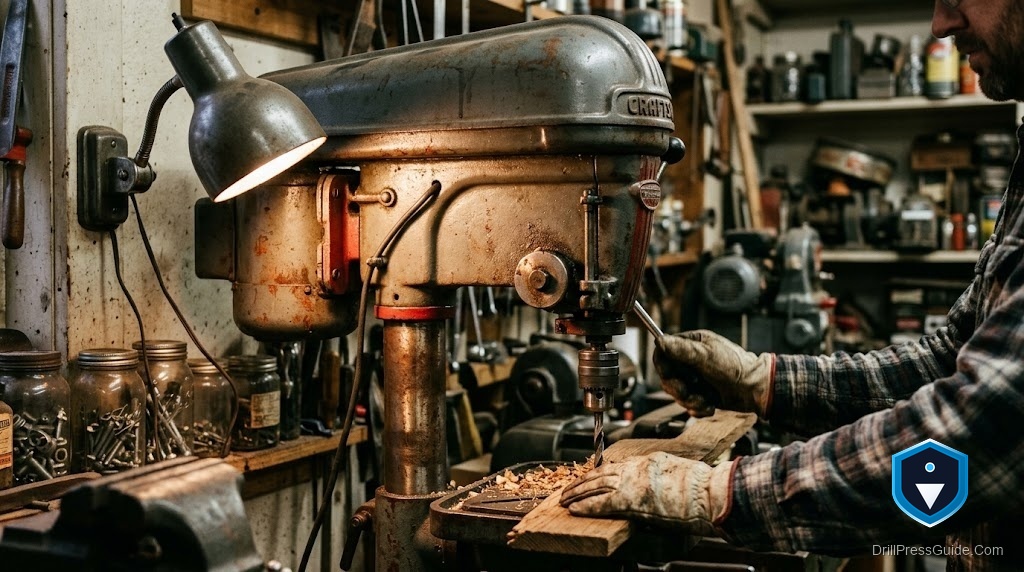
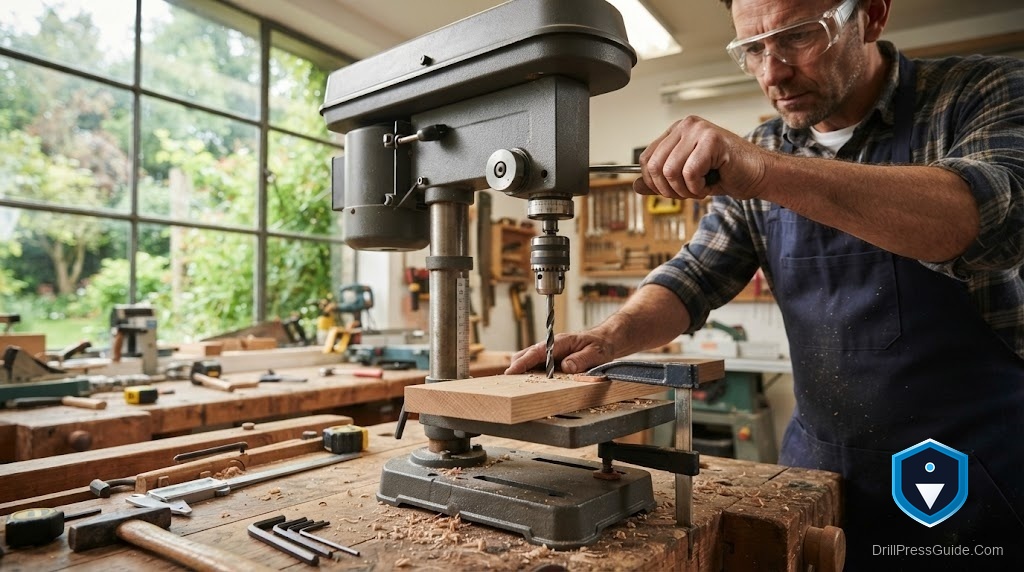
DIY Drill Press Mobile Base: Layout, Hardware, and Setup Choices
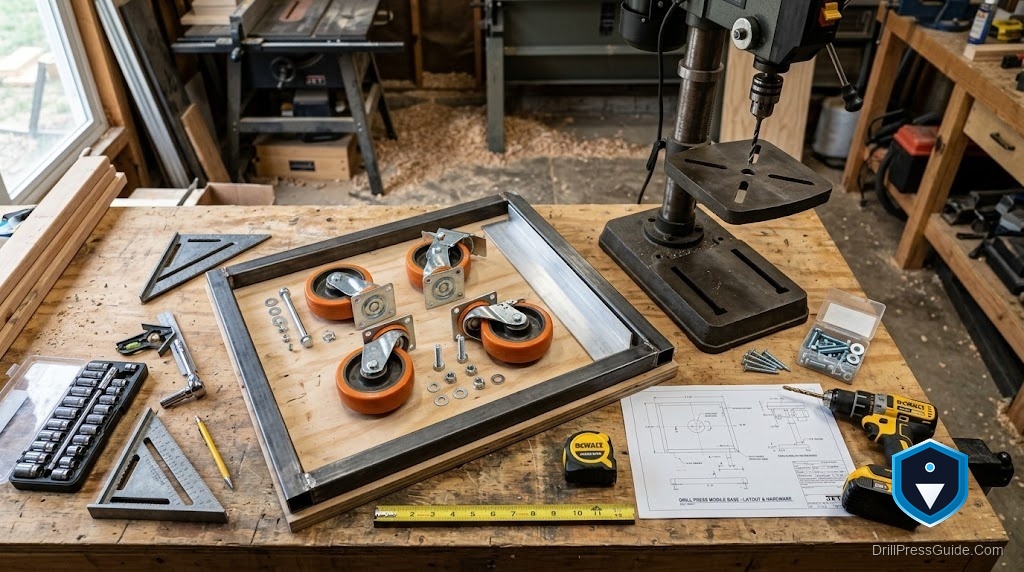
A floor-standing drill press is heavy and awkward to move, and in a small shop that often means it lives in a bad spot because relocating it is a chore. A mobile base fixes that: roll it out to work, roll it back against the wall to reclaim space. Building your own is straightforward, but the choices you make about layout, hardware, and setup decide whether the base rolls easily and, crucially, whether it locks down solid enough that the machine still drills accurately once parked.
A DIY drill press mobile base is a shop-built wheeled platform that a drill press sits on so it can be rolled around the shop and then locked in place for use. Building one comes down to layout, how the wheels and the machine sit on the frame, hardware, the casters and locks you choose, and setup, how the machine attaches and how the base becomes rigid when parked.
Short answer: build a rigid frame footprint at least as wide as the machine’s base, fit locking casters or a caster-and-fixed-foot arrangement, attach the drill press so it cannot shift, and make sure the base becomes solid and stable when locked. The key tension is mobility versus stability, so the choices should let it roll freely yet sit rock solid and level when in use.
Layout: footprint and wheel placement
The layout must respect that a drill press is top-heavy, so the base footprint should be at least as wide as the machine’s base, and ideally a little wider, to resist tipping while rolling. Place the casters at the corners of that footprint for the widest, most stable stance, and position the machine centered over the base so its weight is balanced. If you use a mix of casters and fixed feet, lay them out so the base tips slightly onto the casters to roll and sits on the feet to park. A layout that keeps the footprint wide and the machine centered is what makes a tall machine safe to move, so settle the footprint before choosing hardware.
Hardware: casters and locks
Hardware is where mobility and stability are balanced. Choose casters rated well above the machine’s weight so they roll easily and do not fail, and prefer locking casters, or a design with fixed feet, so the base can be immobilized. Plain unlocked casters are the common mistake, because a machine that can roll while running is both inaccurate and unsafe. Total-lock casters that stop both rolling and swiveling give the steadiest park. Whatever you choose, the hardware must let the base go from freely rolling to firmly locked, since that transition is the whole point. Size and quality here matter more than anywhere else on the build.
Setup: attaching the machine and getting rigid
How the machine attaches and how the base becomes rigid when parked decide whether accuracy survives the convenience. Bolt the drill press to the base through its base holes so it cannot shift or walk, never rely on friction or its own weight. Build the frame stiff enough not to flex or rack, because a wobbly base moves under drilling force. When parked, the base must sit solid and level: locking casters should take out the roll, and if the floor is uneven, plan for adjustable feet or shims so it does not rock. A base that attaches the machine solidly and locks to a rigid, level stance keeps the drill press as accurate parked as it would be bolted to the floor.
Using it safely
A mobile base changes how you handle a tall, heavy machine, so use it with care. Always lock the base before drilling, so nothing rolls under load. Move the machine slowly, ideally with the drilling head low and the chuck retracted to keep the center of gravity down, and be mindful of tipping on thresholds or uneven floors. Check periodically that the mounting bolts stay tight and the casters and locks work, since a loose machine on a rolling base is hazardous. Used thoughtfully, a mobile base gives you a machine you can position anywhere and still trust to drill accurately once locked down.
Conclusion
A DIY drill press mobile base solves the problem of a heavy machine stuck in a bad spot, and it is a simple build if you make the right choices. Lay out a footprint at least as wide as the machine with corner wheels and the machine centered, choose quality locking casters rated well above the weight, bolt the machine down solidly, and build the frame stiff so it becomes rigid and level when parked. Then always lock it before drilling and move it low and slow. Balance mobility against stability at every choice and you get the best of both: a machine you can roll anywhere that still sits rock solid and drills accurately when you put it to work.
Frequently asked questions
What is the main challenge in a drill press mobile base? Balancing mobility against stability. It must roll freely yet lock down rock solid and level, because a top-heavy drill press that can move while running is inaccurate and unsafe.
How wide should the base be? At least as wide as the machine’s base, and ideally a little wider, with casters at the corners, so a top-heavy machine resists tipping while it is being rolled.
What casters should I use? Casters rated well above the machine’s weight, and locking ones, ideally total-lock casters that stop both rolling and swiveling, or a design with fixed feet, so the base can be firmly immobilized.
How do I attach the machine to the base? Bolt it through its base holes so it cannot shift or walk. Do not rely on friction or the machine’s weight, since a machine that moves under drilling force drills inaccurately.
How do I keep accuracy once it is mobile? Build the frame stiff so it does not flex, lock the base before drilling, and make sure it sits level and solid when parked, adding adjustable feet or shims on uneven floors.
How do I move it safely? Lock it only after positioning, move slowly with the head low and the chuck retracted to keep the center of gravity down, and watch for tipping on thresholds or uneven floors.
References
- OSHA, Machine Guarding eTool: Drill Presses, osha.gov
- Forest Products Laboratory, wood construction references, fpl.fs.usda.gov