Drill Press Stand Plans: A Practical Workshop Build Guide
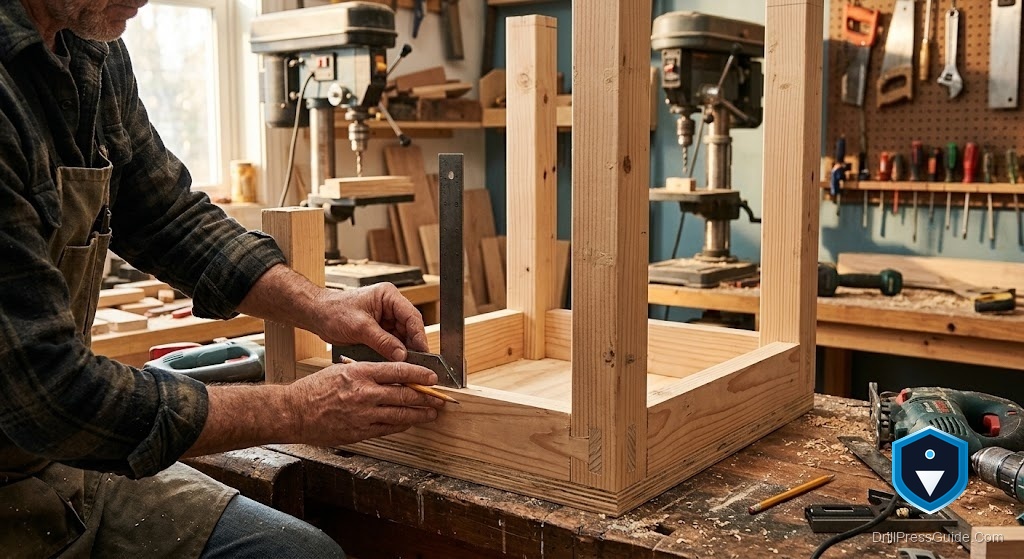
A benchtop drill press is a great machine hobbled by a bad habit: it hogs bench space you need for everything else, and it often sits too low for comfortable work. A shop-built stand fixes both, giving the machine its own solid base at the right height and freeing your bench. Build it well and you get a rock-steady platform that improves accuracy; build it poorly and you get a wobbly tower that makes drilling worse. Good plans are what separate the two, and they come down to a few principles about stability, height, and mass.
Drill press stand plans are the drawings and specifications for building a dedicated floor stand that a benchtop drill press bolts to, raising the machine to a working height on a stable, often weighted base. Good plans specify a rigid frame, a footprint wide enough to resist tipping, a comfortable spindle height, and a solid top that the machine bolts to firmly.
Short answer: good drill press stand plans focus on stability first, a wide, rigid base that will not rock or tip, then a comfortable working height and a solid mounting top. Add mass low in the stand for steadiness, and bolt the machine down firmly. Get stability and mounting right and the stand improves the machine; storage and extras are useful bonuses, not the point.
Why stability is the whole job
A drill press is top-heavy, and a benchtop machine on a stand raises that weight higher, so the stand’s first job is to not tip or rock. That means a footprint wider than you might expect, a rigid frame that does not rack, and mass kept low. A stand that wobbles under a big bit transfers that movement straight into the hole, undoing the accuracy the drill press exists to provide, and at worst it can tip. So the plans should prioritize a wide, well-braced base over looks or compactness. Everything else about a stand is secondary to it standing dead still under load.
Height, mass, and the top
Set the working height so the chuck and table sit where you can work comfortably standing, typically so the table is around waist to lower-chest height, though you should size it to your own height and how you use the machine. Build in mass low in the stand, a shelf that holds weight, a heavy base, or a place for sandbags or a paver, because low mass dramatically improves steadiness. The top that the machine bolts to must be solid and flat, thick plywood or a welded plate, so the drill press base seats fully and the bolts hold. A thin or flexy top lets the machine rock no matter how good the frame is.
Materials and construction choices
Stands are built from wood or steel, and both work if the principles are followed. A wood stand from thick plywood or dimensional lumber is easy to build with basic tools; brace the corners and use gussets so the frame does not rack. A welded steel stand is more rigid for its size but needs welding skills and tools. Either way, join the frame rigidly, glue and screw or weld rather than relying on a few fasteners, and add a lower shelf both for storage and for the mass it can carry. Choose the material for the tools and skills you have; a well-braced wood stand beats a poorly welded steel one every time.
Mounting and setup
Once the stand is built, bolt the drill press to the top through its base holes, snug and secure, because a machine that can shift on its stand defeats the purpose. Level the stand on the floor, shimming feet if needed, so the table and spindle relate squarely and the machine does not rock. On a lighter stand, consider anchoring it to the floor or loading the lower shelf with weight for extra stability. Check that the machine is solid by leaning on it before drilling. A few minutes leveling and securing turns a well-built stand into a steady, accurate base.
Conclusion
Drill press stand plans succeed or fail on stability, so good plans put a wide, rigid, low-mass base ahead of everything else, then add a comfortable working height and a solid top that the machine bolts to firmly. Build the frame rigidly in wood or steel, keep weight low with a loaded shelf, and mount the drill press securely and level. Do that, and the stand gives a benchtop machine its own steady home at the right height, freeing your bench and improving accuracy. Skimp on the base or the mounting, and you get a wobbly tower that makes drilling worse, so let stability drive every choice in the plan.
Frequently asked questions
What matters most in a drill press stand? Stability. A wide, rigid, low-mass base that will not rock or tip is the whole job, because any movement transfers straight into the hole and undoes the machine’s accuracy.
How tall should the stand be? Set it so the chuck and table sit at a comfortable working height for you standing, often with the table around waist to lower-chest height. Size it to your own height and use.
Should I build it from wood or steel? Either works if built rigidly. Wood is easy with basic tools and must be well braced; steel is more rigid for its size but needs welding. A well-braced wood stand beats a poorly welded steel one.
How do I keep it from tipping? Use a footprint wider than you might expect, keep mass low with a loaded shelf, and consider anchoring a lighter stand to the floor. Top-heavy machines demand a wide, weighted base.
How do I mount the drill press to the stand? Bolt it through its base holes to a solid, flat top, snug and secure, so it cannot shift. A thin or flexy top lets the machine rock no matter how good the frame is.
Does adding weight really help? Yes. Mass kept low in the stand dramatically improves steadiness, which is why a loaded lower shelf, a heavy base, or added weight is a common feature of good stand plans.
References
- OSHA, Machine Guarding eTool: Drill Presses, osha.gov
- Forest Products Laboratory, wood construction references, fpl.fs.usda.gov