Small Drill Press Motor: What It Is, Where It Fits, and What to Check
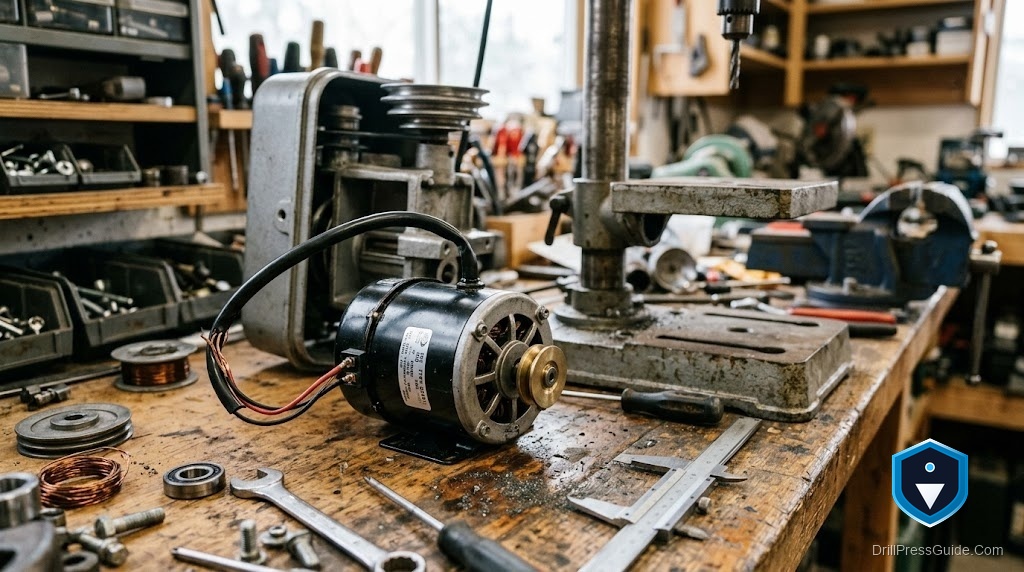
When a small drill press stops spinning, the mind jumps straight to the motor. Sometimes that is right. More often the motor is fine and the real trouble is a switch, a capacitor, a belt, or a wiring connection that quietly failed. Sorting the actual problem from the assumed one saves you from buying a motor you did not need, or worse, hunting for a replacement motor that no manufacturer sells for a machine that was never meant to be rebuilt.
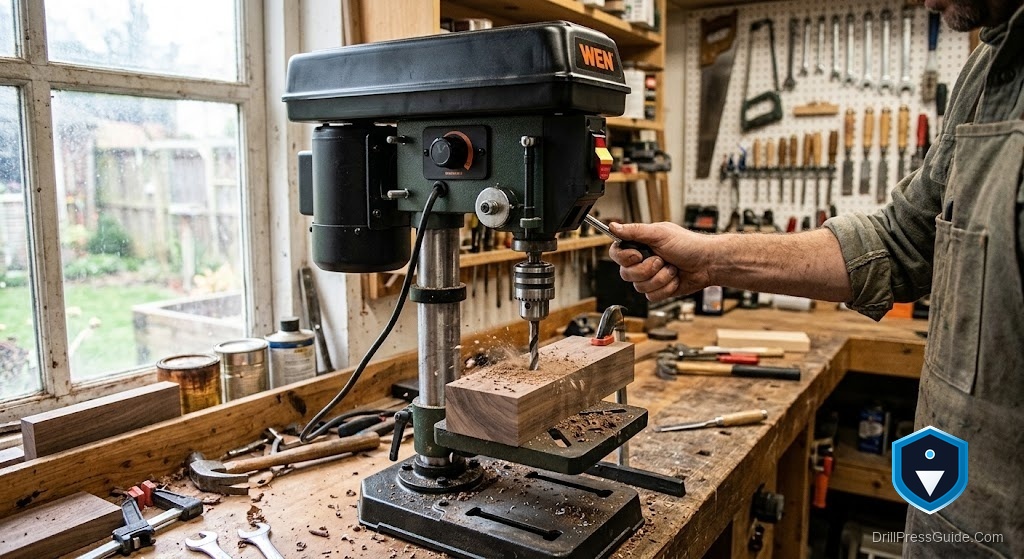
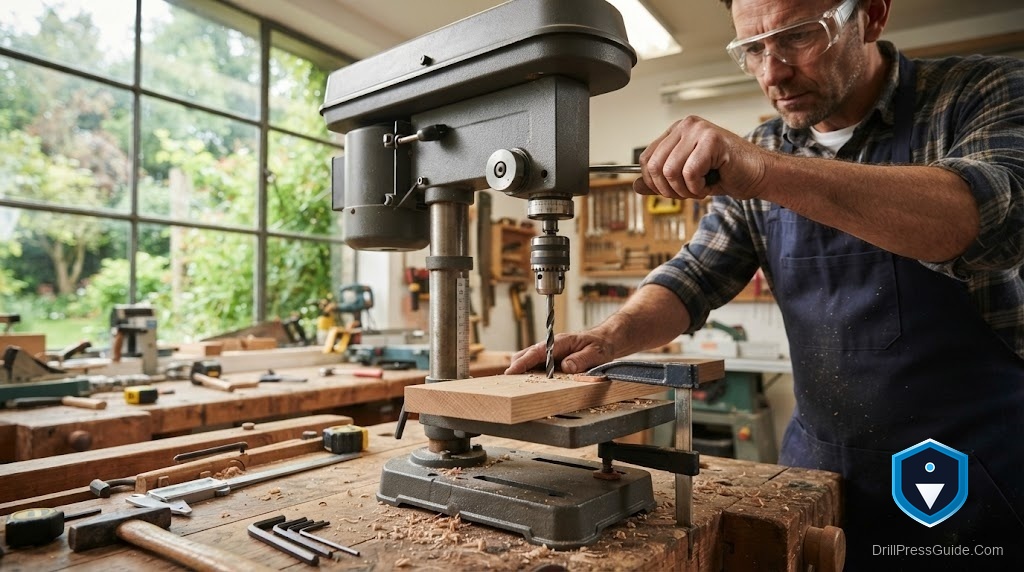
A small drill press motor is the compact electric motor, usually a fractional-horsepower induction motor, that drives the spindle on a benchtop or hobby drill press through a belt and pulley set. On these light machines the motor is often built into or matched tightly to the head, which shapes both how you diagnose a problem and what your options are when it truly fails.
Here is the short version. Before replacing anything, confirm the motor is actually the fault, because switches, capacitors, and belts fail far more often. If the motor is genuinely dead on a small, inexpensive machine, a matching replacement motor is frequently unavailable or costs more than the whole press, so replacing the machine is usually the smarter move.
Diagnose before you buy
A motor that hums but will not turn, or turns slowly, is often a bad start capacitor, not a dead motor. A machine that does nothing at all frequently has a failed switch or a loose connection, both cheap and easy to check. A motor that runs but the spindle does not is a belt problem, not a motor problem. Work through the simple causes first: check the switch, look for a bulged or leaking capacitor, inspect the belt, and confirm the machine is getting power. Only after those are ruled out should you conclude the motor itself has failed. Most “dead motor” calls on small drill presses are really one of these cheaper faults.
Why a small motor is hard to replace on its own
On a light benchtop or hobby machine, the motor is often specified to the head, with a particular frame size, shaft, mount pattern, and pulley. Manufacturers of budget machines rarely sell the motor as a standalone part, and a generic motor almost never bolts up without a mismatch in the mount, shaft diameter, or pulley fit. You can sometimes adapt a standard fractional-horsepower motor if you are handy and willing to match the frame, shaft, and mounting, but that is a project, not a part swap. The honest truth is that these motors were built as part of a disposable machine, not a serviceable one.
What the motor spec actually tells you
If you are shopping a machine rather than a part, read the motor honestly. Amperage is a better real-world guide than a stamped horsepower number on small tools, because inflated peak horsepower claims are common. A higher-amp induction motor runs cooler and bogs down less in dense wood or metal. On a small machine you are not expecting big-bore capacity anyway, but a motor with a little headroom holds speed better when a bit loads up, which is the difference between a clean hole and a stalled bit.
When it makes more sense to replace the machine
If the motor on a small drill press is truly dead and no matching replacement exists, the money is usually better spent on a new machine. A capable small press like the WEN 4208T 8-inch five-speed drill press gives you a fresh induction motor, a new belt and switch, and a warranty, often for less than the time and money of adapting a generic motor onto an old head. If you want a bit more capability in a compact machine, the Genesis GDP1005A 10-inch five-speed drill press steps up the chuck to 5/8 inch and adds a work light while staying small. Rebuild a machine you genuinely value. Replace a cheap one that needs a heart transplant.
Conclusion
A small drill press motor is easy to blame and often innocent. Check the switch, the capacitor, and the belt before you condemn it, because those account for most failures and cost a fraction of a motor. When the motor really is gone, accept that most small machines were not built to be re-motored, and a standalone replacement is rarely worth the hunt or the adapting. A fresh compact press like the WEN 4208T or the Genesis 10-inch usually beats resurrecting a disposable machine. Fix what is cheap to fix, and replace what was never meant to be rebuilt.
Frequently asked questions
Why won’t my drill press motor start? Often a failed switch, a bad start capacitor, or a loose connection rather than a dead motor. A humming motor that will not turn usually points to the capacitor.
Can I replace just the motor on a small drill press? Sometimes, but the motor is often matched to the head, and budget makers rarely sell it as a part. Adapting a generic motor means matching the frame, shaft, and pulley, which is a project.
Is amperage or horsepower a better measure of a small motor? Amperage is the more honest real-world guide on small tools, because peak horsepower claims are often inflated. A higher-amp induction motor holds speed better under load.
My motor hums but the spindle doesn’t turn, what’s wrong? If the motor hums, suspect the start capacitor. If the motor runs but the spindle does not, check the belt. Rule these out before replacing the motor.
Is it worth buying a replacement drill press motor? On a valued machine, yes. On a cheap small press with no matching motor available, a new machine usually costs less than adapting a generic motor.
What size motor does a small benchtop drill press use? Typically a fractional-horsepower induction motor. Judge it by amperage draw rather than the stamped horsepower, and expect modest capacity from small machines.
References
- WEN Products, 4208T drill press specifications, wenproducts.com
- Genesis Power Tools, GDP1005A operator’s manual, genesispowertools.com