
A Closer Look at the Drill Press Table Before You Commit
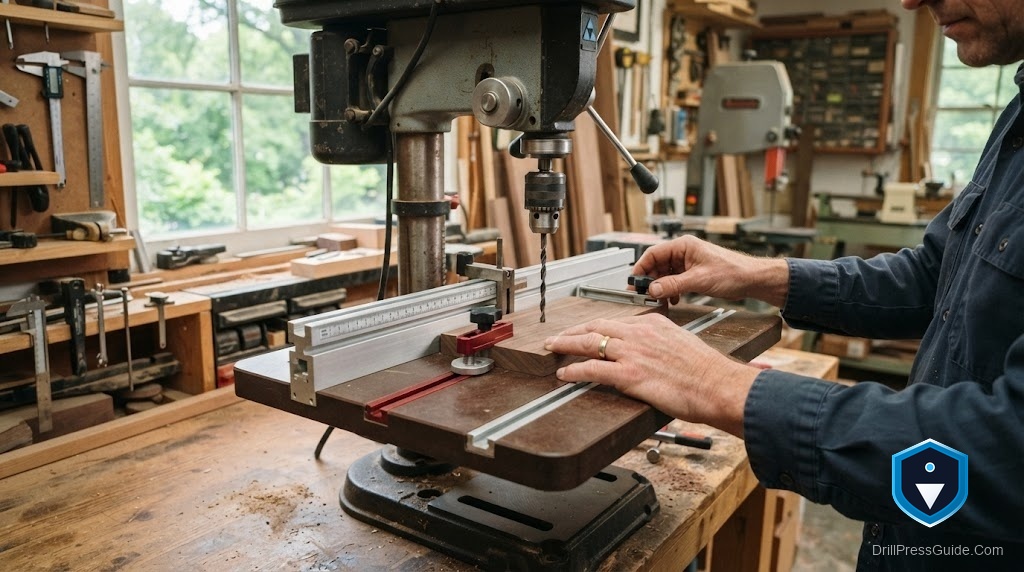
You clamp a long board to the table, line up the bit, and start drilling. Halfway through the first hole, the board shifts. The table flexed. Your clamp slipped. Now you have a crooked hole and a ruined workpiece. The drill press table is the surface that holds your work, and it is the single most underappreciated part of the machine.
I have worked with dozens of drill presses over the years, and the table is where most cheap machines fail. A bad table wobbles, dents, or tilts under load. A good table gives you room to clamp, stays flat, and adjusts smoothly. This guide reviews what makes a drill press table worth your money and which models get it right.
A drill press table is the flat, horizontal work surface that supports the material being drilled. It is mounted on a column below the chuck and can usually be raised, lowered, tilted, and rotated around the column. The table may have slots, holes, or flat surfaces for clamping vises, fixtures, and stops. The quality of the table determines how securely you can hold work, how accurately you can position it, and how much vibration reaches the cut.
The best drill press tables in 2025 are large, cast-iron, and easy to adjust. They have enough surface area for vises and clamps, they do not deflect under normal drilling loads, and their tilt and elevation mechanisms move smoothly without slop. A table with T-slots is better than one with plain holes because T-slots accept standard clamping hardware without bolting through the top.
What Separates a Good Table from a Bad One
Material is the first thing to check. Cast iron is the standard for good tables because it is heavy, dampens vibration, and resists dents. Aluminum tables are lighter but scratch and dent easily. Stamped steel tables are the worst. They flex, ring like a bell, and warp if you overtighten a clamp. If a press has a stamped steel table, you are already fighting the machine before you turn it on.
Size matters. A table that is 6 inches by 7 inches is barely enough for a small vise. A table that is 11 inches by 11 inches or larger gives you room to clamp long boards, use a fence, or mount a hold-down. Large tables also reduce vibration because the mass absorbs more energy from the cut.
T-slots are a practical feature. They let you bolt a vise or clamp directly to the table without drilling new holes. Some tables have a grid of threaded holes instead. This works but is less flexible because the holes are fixed in position. A plain table with no slots or holes is the hardest to work with because you must rely on C-clamps or a separate sub-table.
The elevation mechanism is how you raise and lower the table. Rack-and-pinion is the most common system. A hand crank turns a gear that rides on a vertical rack on the column. Good racks are smooth and have no skipped teeth. Cheap racks bind, grind, or slip. Some tables use a simple clamp bolt that you loosen, slide the table, and retighten. This is slower and harder to adjust for exact height.
Tilt is useful for angled drilling. Most benchtop tables tilt 45 degrees left and right. Some premium tables tilt 90 degrees. The tilt mechanism should lock firmly with a single lever or bolt. If the tilt slips under drilling pressure, your angle holes will be wrong.
Drill Press Models with Standout Tables
JET JDP-15B
The JET JDP-15B has a 12-1/2 by 17-inch precision-ground cast-iron table with T-slots and four table slots. This is one of the largest tables on a benchtop press. The surface is ground flat, which helps when you need the table to be truly perpendicular to the chuck. The T-slots accept standard hardware, and the extra slots give you more clamping options for irregular workpieces.
The elevation system uses a rack-and-pinion crank that is smooth and positive. The table also has an edge lip designed to make clamping easier. I have used this table for fixture work, and it is the best benchtop table I have worked with for the money. The size alone makes it worth considering if you build furniture or use large jigs.
The flaw is weight. The table is heavy, and the whole machine is 165 pounds. You need a sturdy bench to support it. Also, the table is so large that it can interfere with the crank handle if you tilt it far to one side. You may need to clear the area before tilting.
Skip the JET if you have a small bench or only do light hobby work. The table is overkill for a machine that only drills small holes in thin stock. For serious woodworkers and metalworkers, it is the best benchtop table available.
Check the JET JDP-15B on Amazon
WEN 4214T
The WEN 4214T has a 9-1/2 by 9-1/2-inch cast-iron table with a roller extension. The table tilts 45 degrees and uses a rack-and-pinion elevation system. The roller extension is a unique feature that helps support long boards or panels when you drill near the edge.
This table is a good balance of size and practicality. The 9-1/2-inch square surface is large enough for a vise and most workpieces. The roller extension is genuinely useful for cabinet sides and shelving. The cast iron is solid, and the rack elevation is smooth after a few hours of break-in.
The flaw is that the table lacks T-slots. You get a plain surface with a few clamping holes. This means you must use a vise or C-clamps rather than bolting fixtures directly to T-slots. Also, the roller extension adds width that can be awkward in tight shops. It is removable, but then you lose the support feature.
Skip the WEN 4214T if you need T-slots for fixtures or repeat setups. It is a strong choice for general woodworking and panel work where the roller extension earns its keep.
Grizzly G7943
The Grizzly G7943 has an 11-3/8 by 11-3/8-inch cast-iron table with T-slots. This is a heavy-duty benchtop press with a 3/4-horsepower motor and 14-inch swing. The table is one of the largest on a benchtop machine and is built for serious work.
The T-slots are the standout feature here. They let you mount vises, fences, and stop blocks with standard hardware. The table is thick cast iron that does not deflect under heavy drilling or mortising loads. The elevation is rack-and-pinion, and the tilt goes to 90 degrees left and right, which is more than most benchtop models.
The flaw is that the G7943 is discontinued. You may find it used, but new units are scarce and replacement parts are not guaranteed. Also, the table is so heavy that raising it to the top of the column takes effort. If you change table height often, you will feel the weight.
Skip the G7943 unless you find a clean used unit at a fair price. The table is excellent, but the scarcity of new machines makes it a risky purchase for a primary tool. For a second press in a busy shop, it is a solid find.
BUCKTOOL DP12VL
The BUCKTOOL 12-inch drill press has a cast-iron table with a crosshair laser and LED work light. The table surface is ground and the edges are machined square. It is a solid mid-size table for general work.
The table is large enough for most home projects and the cast iron is decent quality. The laser mount is integrated into the table support, which keeps it aligned better than separate laser kits. The elevation crank is smooth and the tilt locks firmly.
The flaw is the lack of T-slots. Like the WEN, this table relies on a plain surface and a few holes. Also, the table is slightly smaller than the Grizzly and JET, so large fixtures may overhang. The laser is a nice feature but does not help with clamping or table rigidity.
Skip the BUCKTOOL if you need T-slots or a very large table. It is a good choice for a home shop that does general drilling and wants a solid table without the weight of a 15-inch machine.
Check the BUCKTOOL 12-Inch Drill Press on Amazon
Shop Fox W1667
The Shop Fox W1667 has a 7 by 7-inch cast-iron table that tilts 90 degrees. This is an 8-1/2-inch oscillating drill press, so the table is sized for the machine’s smaller capacity. The table is well-made for the class but small.
The 90-degree tilt is the standout feature. Most tables only tilt 45 degrees. The extra range is useful for angled drilling in small parts and for sanding operations when the machine is in oscillating mode. The cast iron is solid and the clamp is positive.
The flaw is size. Seven inches square is cramped for anything but small workpieces. You will need a sub-table or auxiliary fence for most projects. Also, the elevation uses a simple clamp bolt rather than a rack-and-pinion crank, so height adjustments are slower.
Skip the Shop Fox if you need a large table for furniture or panel work. It is the right choice for a compact shop that does small parts, crafts, or sanding.
Check the Shop Fox W1667 on Amazon
Comparison Table
| Model | Table Size | Material | T-Slots | Tilt | Elevation | Best For |
|---|---|---|---|---|---|---|
| JET JDP-15B | 12.5 x 17 in | Cast iron | Yes | 90 degrees | Rack-and-pinion | Fixtures, large work |
| WEN 4214T | 9.5 x 9.5 in | Cast iron | No | 45 degrees | Rack-and-pinion | Panel work, general use |
| Grizzly G7943 | 11.4 x 11.4 in | Cast iron | Yes | 90 degrees | Rack-and-pinion | Heavy-duty, used finds |
| BUCKTOOL DP12VL | ~9 x 9 in | Cast iron | No | 45 degrees | Rack-and-pinion | Home shop, general use |
| Shop Fox W1667 | 7 x 7 in | Cast iron | No | 90 degrees | Clamp bolt | Small parts, sanding |
Aftermarket Table Upgrades
If you already own a drill press with a poor table, you have options. A wooden sub-table is the simplest upgrade. Screw a piece of 3/4-inch plywood or MDF to the metal table, drill a hole for the bit clearance, and use the wood surface for clamping. You can add fences, stops, and T-track to the wood surface for very little money.
A commercial auxiliary table is another option. Several companies sell cast-iron or aluminum tables that bolt to the existing table and add T-slots, fences, and larger surfaces. These are worth considering if you do repetitive work like shelf pin holes or doweling.
Finally, a drill press vise is the most practical upgrade for any table. A good vise holds the work securely and frees both hands for feeding the quill. Look for a vise with a swivel base and jaws that open at least 3 inches.
Frequently Asked Questions
What is the best material for a drill press table? Cast iron is the best material because it is heavy, flat, and dampens vibration. Aluminum is acceptable but dents easily. Stamped steel is the least desirable because it flexes and rings.
Do I need T-slots on my drill press table? T-slots make clamping and fixture mounting much easier. They are not required, but if you plan to use vises, fences, or stop blocks regularly, T-slots are worth the upgrade.
Can I replace a small drill press table with a larger one? Some manufacturers offer larger tables as accessories. You can also build a wooden sub-table or buy an aftermarket auxiliary table that bolts to the existing surface.
What is rack-and-pinion table elevation? A rack-and-pinion system uses a hand crank to turn a gear that rides on a vertical rack. It is the smoothest and most precise way to raise and lower a drill press table. Clamp-bolt systems are cheaper but slower.
How much table tilt do I need? Forty-five degrees left and right covers most angled drilling. Ninety degrees is useful for special projects and sanding but is not necessary for general work.
Why does my drill press table wobble? Wobble is usually caused by a loose clamp bolt, worn rack, or bent column. Check the clamp first. If the rack is worn, the table may need replacement or repair.
Is a larger table always better? Larger tables are better for large work and clamping, but they add weight and may interfere with the crank handle or quill. Choose a table size that fits your typical workpieces.
Can I use a drill press vise on any table? Yes, a vise can be clamped to any flat table. T-slots make bolting easier, but C-clamps work fine for occasional use.
What is a drill press sub-table? A sub-table is an auxiliary surface, usually wood or aluminum, that you attach to the factory table to increase size or add features like T-track and fences.
Do laser guides help with table alignment? Lasers help center the bit over the work but do not affect table flatness or alignment. Use a square to check that the table is perpendicular to the chuck.
References
- Fine Woodworking: Drill press table reviews and fixture-building guides.
- JET Tools: JDP-15B specification sheet and table dimensions.
- WEN Products: 4214T specification sheet and table features.
- Grizzly Industrial: G7943 product manual and table specifications.
- Shop Fox: W1667 manual and table specifications.
SEO Metadata


