
Choosing a Drill Press Table for Woodworking: What Separates a Good Fit from a Bad One
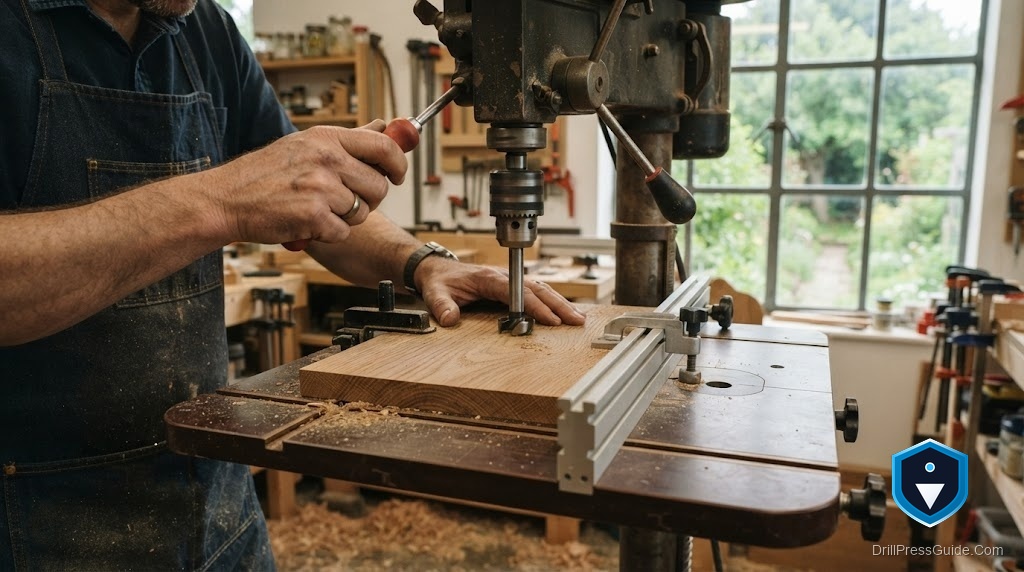
A drill press table is the one accessory that can transform a mediocre machine into a pleasure to use. The stock table that comes with most benchtop presses is small, bare, and often too smooth to hold a workpiece without clamping gymnastics. A good woodworking table gives you fence support, hold-down capacity, and enough surface area to keep a panel from tipping as the bit breaks through. A bad one is a wobbly piece of MDF that costs more than it gives back.
I have used aftermarket tables on benchtop presses, floor presses, and even temporary setups where the machine was borrowed and the table was the only thing I brought. The difference between a good table and a bad one is immediate. The good ones let you drill repeatable holes with a stop block and a fence. The bad ones flex, warp, and make you wish you had just clamped a scrap board to the stock table and called it done.
What a Woodworking Table Needs to Do
Woodworking is different from metalwork when it comes to drill press tables. In metal, you are usually clamping a small, dense piece in a vise. In woodworking, you are often drilling a large, light panel, a long board, or a piece that is too awkward to clamp directly to a tiny table. The table needs to support the workpiece, prevent tearout on the back side, and give you a way to align the bit with a mark or a fence.
A good table is larger than the stock table. It should have a replaceable insert around the bit hole so you can drill through the workpiece without hitting the table surface. It should have a fence that slides and locks parallel to the column, and at least one stop block for repeatable hole spacing. T-tracks or slots for hold-downs are a major plus. Without them, you are clamping from the edges, which is awkward and slow.
Material and Thickness
MDF is common because it is flat, stable, and cheap. A one-inch-thick MDF table is rigid enough for most home shop work. Thinner tables flex. Thicker tables add weight without much benefit. The key is that the surface stays flat. If the table warps from humidity or clamping pressure, your holes will not be square to the face, even if the drill press itself is perfect.
Some high-end tables use aluminum or phenolic resin. Aluminum is durable and flat but expensive. Phenolic is moisture-proof and smooth but also costly. For a home shop, a well-made MDF table with a hardwood edge or a laminate surface is the practical choice. It will last years if you keep it clean and do not use it as a workbench for pounding nails.
The Fence and Stop Block
The fence is the most important feature after size. It should be straight, tall enough to register a board against, and easy to move. A fence that clamps with two knobs is better than one that clamps with a single knob, because it resists pivoting. A micro-adjustment feature is nice but not essential. What matters is that the fence locks parallel to the column and does not shift when you press a board against it.
The stop block lets you set a distance from the fence and drill the same hole in multiple pieces. It should slide smoothly and lock firmly. A stop block that creeps under pressure is worse than no stop block at all. Look for a block that clamps into a T-track or a slot, not one that relies on friction against the fence face.
The Insert and Bit Clearance
The center insert around the bit hole is a wear item. Every time you drill through a workpiece, you hit the insert. Over time, it gets chewed up. A good table has a replaceable insert, usually a small disk of MDF or plastic that drops into a recess. When it gets worn, you pop it out and put in a new one. Without an insert, you are drilling into the main table surface, which eventually creates a ragged hole that catches the workpiece and causes tearout.
The bit hole should be large enough to clear the largest bit you use, but not so large that small workpieces drop into it. Some tables come with multiple inserts with different hole sizes. That is a nice touch. If your table has one large hole, keep a scrap of MDF handy to cover it when drilling small pieces.
Two Tables That Earn Their Place
WEN DPA2412T 24-by-12-Inch Drill Press Table with Adjustable Fence and Stop Block
This is the honest upgrade for a benchtop press. The table measures twenty-four by twelve inches, which is more than double the surface area of most stock tables. It is one-inch MDF, thick enough to stay flat under normal use. The adjustable fence slides along T-tracks and locks with knobs. The stop block adjusts for repeatable hole spacing. There are onboard rulers for quick measurement, and the removable insert lets you drill through without damaging the table. WEN DPA2412T on Amazon
The flaw is the MDF construction. It is not as durable as aluminum or phenolic, and it will swell if you spill finish or water on it. The fence is also MDF, which means it can dent if you drop a clamp on it. For a home shop with reasonable care, it lasts years. For a rough environment or a shared shop, you might want something tougher. But for the price, it is the best first upgrade you can make.
Woodpeckers DP-PRO Drill Press Table System
This is the premium option. The table is aluminum, the fence is anodized aluminum with stainless steel flip stops, and the sides expand to support long workpieces. The system includes dust collection at the bit, which is a game-changer for woodworking. Instead of chips flying everywhere, a vacuum hose pulls them away at the source. The table installs in minutes without drilling into the press, and it fits most drill presses on the market. Woodpeckers DP-PRO on Amazon
The honest flaw is the price. It costs more than many benchtop drill presses. For a hobbyist or occasional woodworker, that is hard to justify. It is also overkill for a shop that only drills a few holes a month. But if you use the drill press regularly, if you work with large panels, or if you share a shop with other woodworkers who will appreciate the dust collection, the DP-PRO is the table that makes the drill press feel like a different machine entirely.
Who Should Skip an Aftermarket Table
If you only drill occasional holes in small pieces, a clamped fence and a scrap of plywood on the stock table is enough. If your stock table is large and has a replaceable insert already, you might not need an upgrade. And if you mostly drill metal, a woodworking table is not the right accessory. A drill press vise is more useful for metalwork than a fence and stop block.
The Verdict
A drill press table for woodworking is not a luxury. It is a practical upgrade that makes the machine safer, more accurate, and more pleasant to use. The WEN DPA2412T is the best starting point for most home shops. It is affordable, functional, and large enough to handle most projects. The Woodpeckers DP-PRO is the best long-term investment for serious woodworkers who want dust collection, expandability, and precision that matches a premium machine. Either way, stop struggling with the tiny stock table. Your holes will be straighter, your workpieces will be safer, and your frustration will drop to zero


